
Euler's Eyes
2024-05-31
Similarity of Triangles
In the previous post we talked about perpendicularity. Now, let’s talk about Similarity of Triangles, which are fundamental concepts in plane geometry, especially triangles.
History of the similarity of triangles
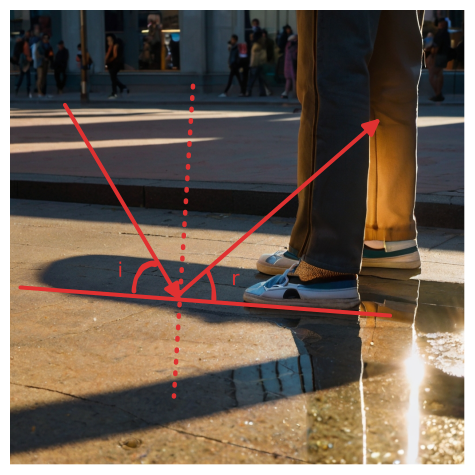
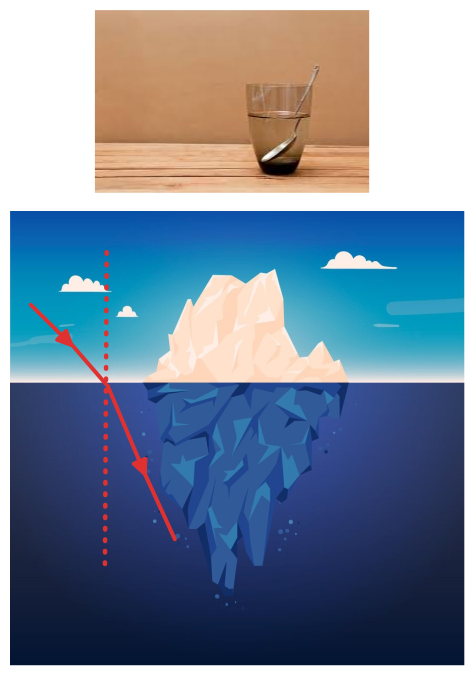
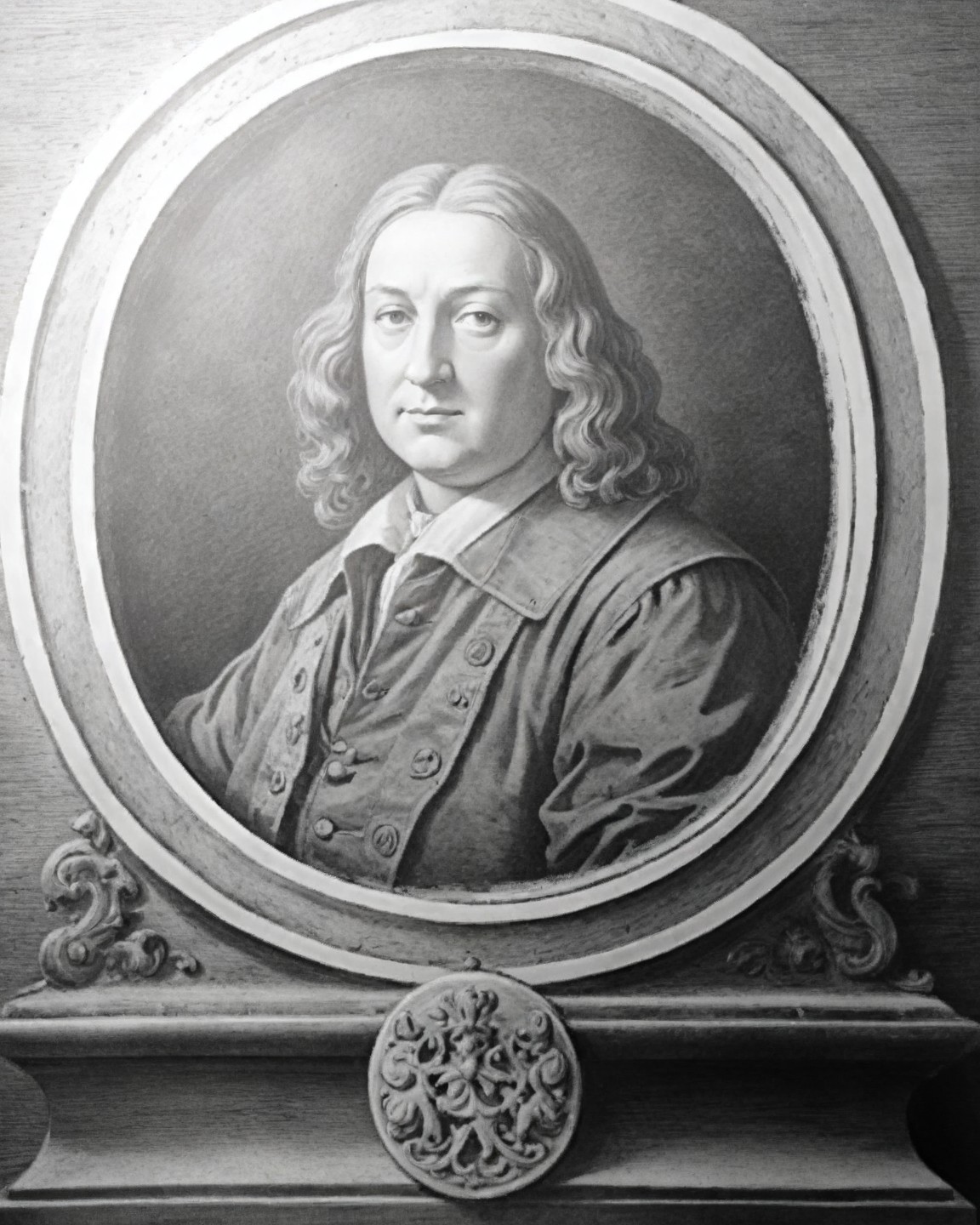
The optics used in entrance exams were discovered by Pierre Fermat in his work Variar Opera Mathematica of 1679. His original name is Clement Samuel Fermat, but he became known as Pierre Fermat. From Fermat’s studies we highlight two important results:
| Reflection of Light | Refraction of Light | Pierre Fermat |
|---|---|---|
|
|
|
This is an example, in which we use the similarity of triangles. Triangle similarity is a concept that says that two triangles are similar if they have the same proportions between sides and angles.
Thales of Miletus, in approximately 600 BC (before Christ), with his rod and shadow, exemplified the practical application of the similarity of triangles in determining the height of the Cheops pyramid. At the request of a pharaoh, he calculated the height of Cheops’ pyramid. To do this, he stuck a stick vertically in the ground and waited until the moment when the shadow and the stick itself were the same size.
To obtain the exact value of the height of the pyramid, Thales should have also asked that half of the side of the base of the pyramid be added to its shadow. Since, with a wide base in hand, part of the pyramid’s shadow was not on the ground.
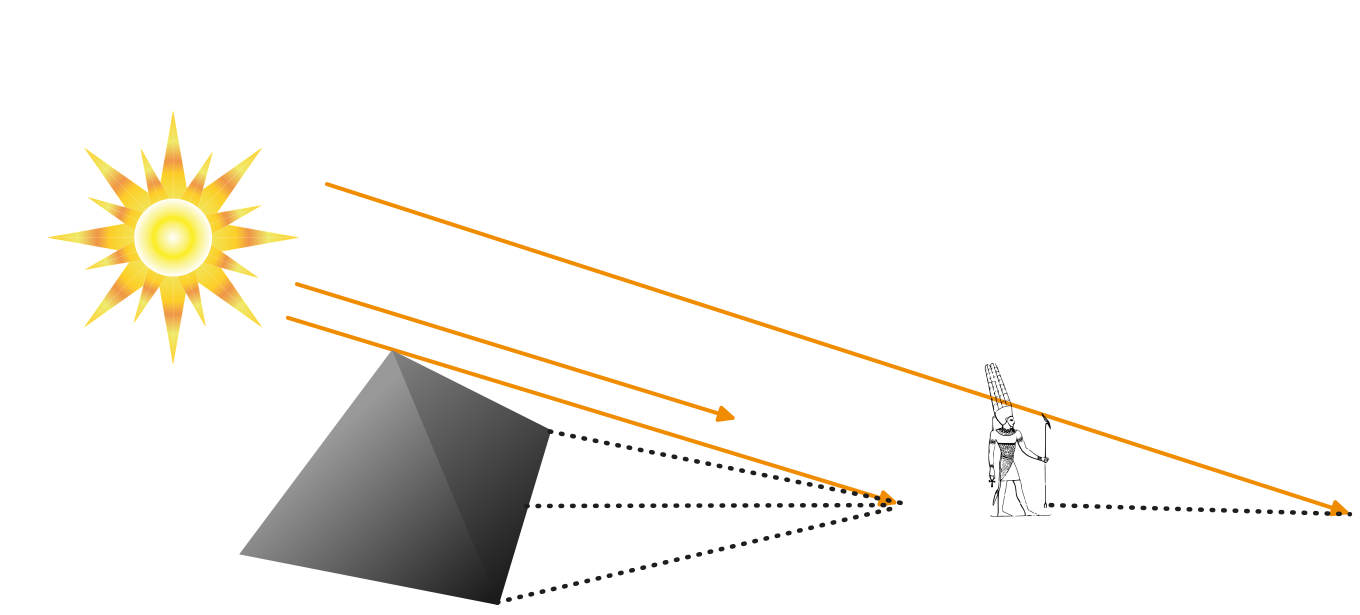
Thales imagined the two imaginary triangles shown below to carry out his calculation.
Applications in everyday life
Triangle similarity is a powerful tool in geometry and can be applied to solve many problems. I will present some strategies and examples of how to use the similarity of triangles:
$$\angle A \cong \angle D$$Determining Unknown Measurements: If you know the angles of two similar triangles and the measurement of a side in one of them, you can use the proportion between the homologous sides to find the corresponding measurement in the other triangle. For example, consider two similar triangles ABC and DEF, where
It is
$$\frac{AB}{DE} = \frac{AC}{DF}$$.
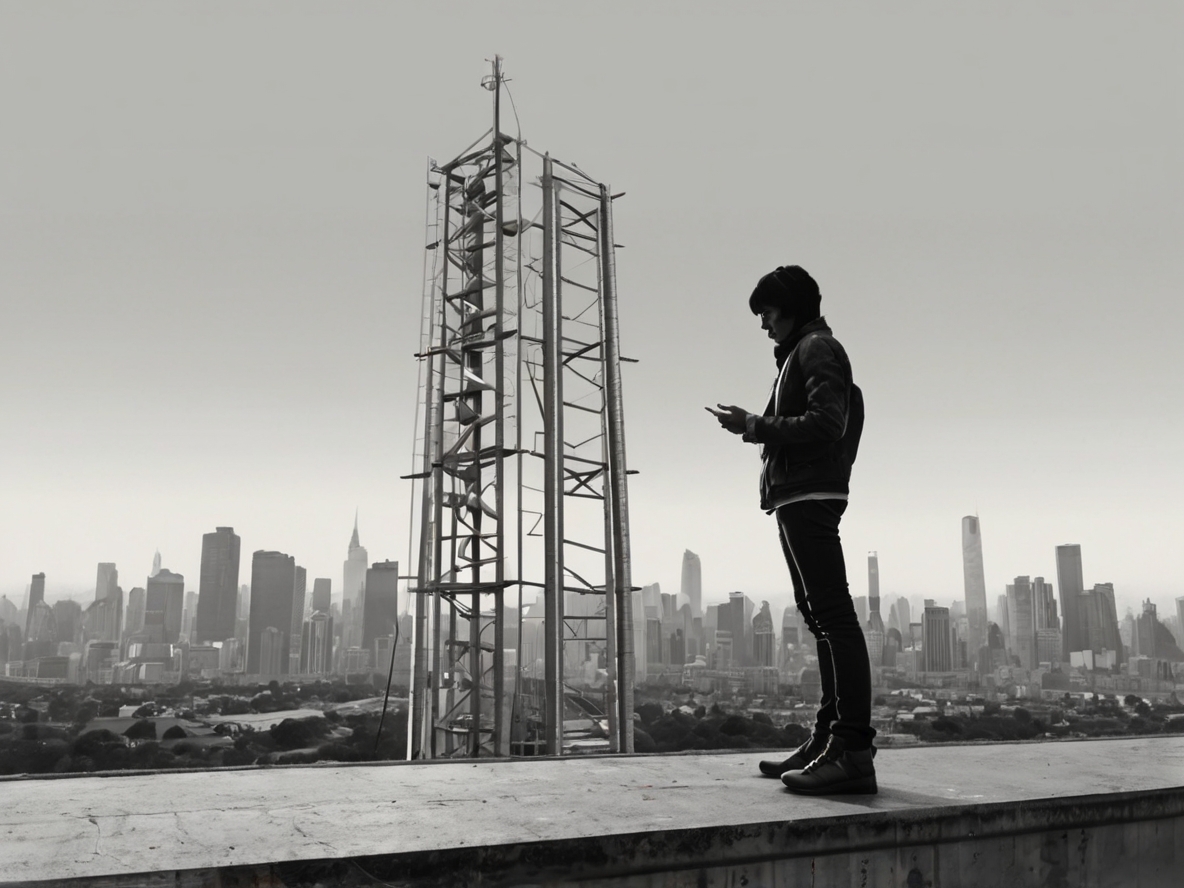
Height and Distance Problem Solving: Imagine a tall post and an observer at a distant point. If you know the height of the observer, the distance between the observer and the post, and the angle of elevation, you can use the similarity of triangles to find the height of the post. The proportion between the heights of similar triangles is equal to the proportion between the distances. For example, if
$$\frac{h_{\text{observer}}}{d_{\text{observer}}} = \frac{h_{\text{lamp post}}}{d_{\text{lamp post}}}$$
Scale and Map Problems: On maps, scale indicates the proportion between real distances and those represented on the map. If you know the scale and distance on the map, you can use the similarity of triangles to find the actual distance. For example, if the scale is 1:50,000 and the distance on the map is 5 cm, the actual distance is ($5 \times 50,000 = 250,000$) cm.
Shadow and Object Height Problems: When an object casts a shadow, we can use the similarity of triangles to find the height of the object. For example, if a lamppost casts a 10 meter shadow on the ground, and the sun’s elevation angle is known, we can use the similarity of triangles to find the height of the lamppost.

Concepts
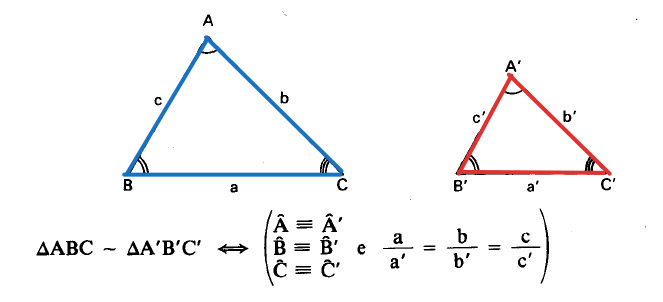
Definition: two triangles are similar if, and only if, they have three angles that are orderly congruent and the corresponding proportional sides (ho = same, logos - place). The ratio between these sides is called the proportionality ratio.
Fundamental theorem
Fundamental Theorem: If a straight line is parallel to one of the sides of a triangle and intersects the other two at different points, then the triangle it determines is similar to the first.
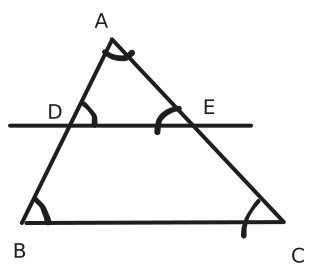
Demonstration:
| Hypothesis | Thesis |
|---|---|
| $\overleftrightarrow{DE} \parallel \overleftrightarrow{BC}\quad \Rightarrow \quad$ | $\Delta ABC \cong \Delta ADE$ |
To prove similarity, we need the triangles to have congruent angles and proportional homologous sides.
- Congruent angles
Of these triangles, we have a common angle $\hat{A}$
- Proportional sides
.
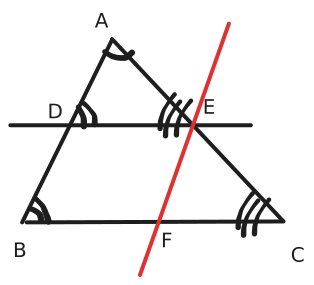
By $E$ we construct $\overleftrightarrow{EF}$ parallel to $\overleftrightarrow{AB}$, with $F$ in $\overline{BC}$.
With this, we have:
$$\frac{\overline{AE}}{\overline{AC}} = \frac{\overline{BF}}{\overline{BC}}$$.
So, we have
$$\frac{\overline{AD}}{\overline{AB}} = \frac{\overline{AE}}{\overline{AC}}= \frac{\overline{DE}}{\overline{BC }}$$.
Therefore, the triangles $ABC$ and $ADE$ are similar or in symbols:
$$\Delta ABC \cong \Delta ADE$$Solved exercises
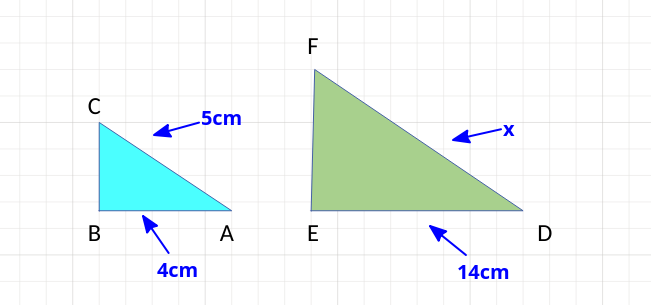
Classic: The following two triangles are similar. Determine the measure of segment DF.
Resolution:
From the similarity of triangles we obtain:
$$\dfrac{\bar{AC} }{\bar{AB} } = \dfrac{\bar{DF} }{\bar{DE} }$$$$\dfrac{5 }{4 } = \dfrac{x }{14 }$$
$$x = \dfrac{35 }{2 }$$
Example of Entrance Examination (Fuvest)
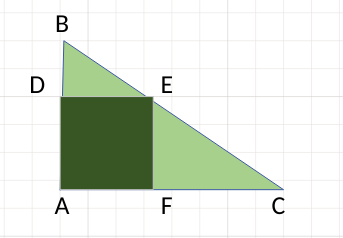
Fuvest: In the following figure, the triangle ABC is a right angle at A, ADEF is a square, $AB=1$ and $AC=3.$ How long is the side of the square?
Resolution:
Initially, we will apply the criterion (side, angle, side). Since angle A is right, we can apply the criterion (side, side, side).
$$\dfrac{\bar{DB} }{\bar{DE} } = \dfrac{\bar{FE} }{\bar{FC} }$$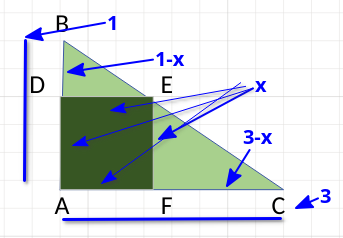
In this way, we have:
$$\dfrac{1-x }{x } = \dfrac{x }{3-x }$$$$(1-x)(3-x) = x~.~x$$
$$x = \dfrac{3}{4}$$
Therefore, since $x$ cannot be zero, the side of the square is $\dfrac{3}{4}$.
Here a small introduction to the Similarity of Triangles was made, wait for the next posts.