
Euler's Eyes
2024-06-18
Rectangle, Rhombus and Square
In this post the central point of the theme is the Rectangle, Rhombus and Square, as well as their properties.
The history of squares and rectangles dates back to antiquity, when civilizations such as the Egyptian and Mesopotamian already used these geometric shapes to measure land, build monuments and symbolize religious concepts.
Introduction
Notable quadrilaterals are geometric figures that play a fundamental role in mathematics. Let’s explore its historical origin and properties.
Euclid and the Notable Quadrilaterals
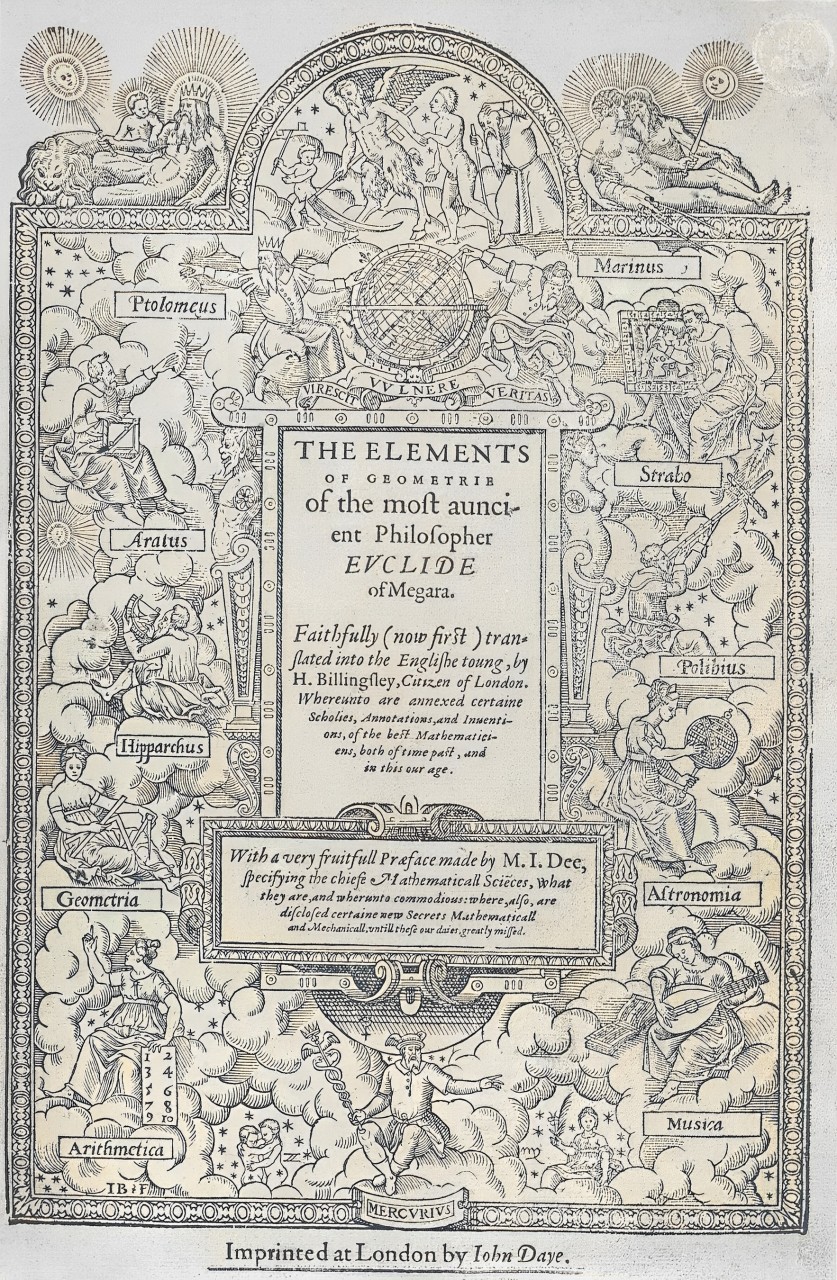
Origin: Geometry, as we know it today, had its origins around 300 BC, with the Greek mathematician Euclid in his work “The Elements”.
Euclid’s Definitions:
Rhomboid (today called parallelogram): Opposite sides and angles equal, but without equal sides or right angles.
Oblong (today called rectangle): Right angles, but do not have four equal sides.
Rhombus (today called a rhombus): Four equal sides, but without right angles.
Square: Four equal sides with right angles.
| Elements - Euclid of Alexandria |
|---|
|
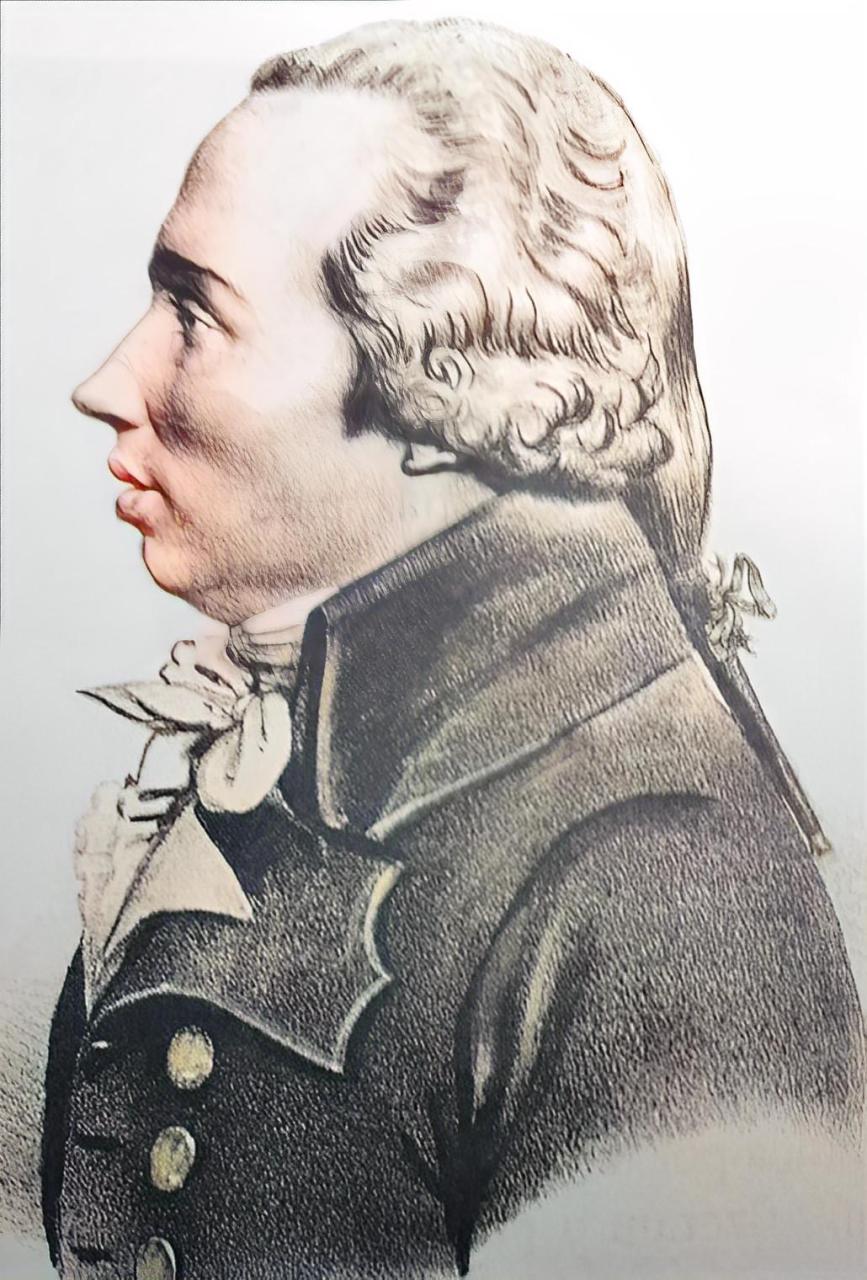
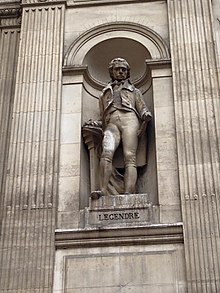
Adrien-Marie Legendre and Geometric Rigority
Definitions of Legendre (1793):
Parallelogram: Opposite sides parallel.
Rectangle: Right angles, without equal sides.
Rhombus: Equal sides, without right angles.
Square: Equal sides and right angles.
| Adrien-Marie Legendre | |
|---|---|
|
|
Hadamard and the Expansion of the Concept
Definitions by Hadamard (1898):
Parallelogram: Four parallel sides two by two.
Rectangle: All angles equal (and therefore right).
Rhombus: All sides equal.
Square: All equal sides and right angles.
| Jacques Salomon Hadamard |
|---|

|
Rectangle
Rectangles also have ancient roots, but their systematic study was refined by medieval Arab and European mathematicians.
Definition: A convex flat quadrilateral is a rectangle if, and only if, it has four congruent angles.
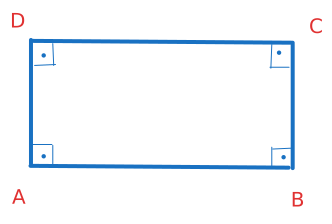
Rectangle - congruent diagonals
One of the properties of the rectangle is:
In every rectangle the diagonals are congruent
Demonstration:
| Hypothesis | Thesis |
|---|---|
| $$ABCD ~\text{ is rectangle} \qquad\Rightarrow \qquad$$ | $$\overline{AC} \equiv \overline{BD}$$ |
As by hypothesis $ABCD$ is a rectangle, this implies that $ABCD$ is a parallelogram, which implies $\overline{BC}\equiv \overline{AD}$
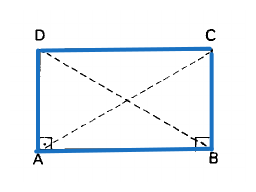
Consequently the angles $\hat{B}\equiv \hat{A}$.
Therefore,
$$\overline{AC} \equiv \overline{BD}$$$\blacksquare$
As a consequence:
Every parallelogram that has congruent diagonals is a rectangle.
Rhombus
The study of rhombuses also dates back to antiquity, but its formalization occurred throughout the history of geometry.
Definition: A convex flat quadrilateral is a rhombus if, and only if, its four sides are congruent.
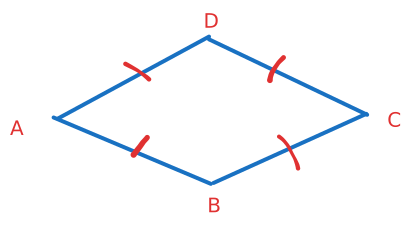
Rhombus - perpendicular diagonals
One of the properties of the rhombus is:
In every rhombus the diagonals are perpendicular
Demonstration:
| Hypothesis | Thesis |
|---|---|
| $$ABCD ~\text{ is rhombus} \qquad\Rightarrow \qquad$$ | $$\overline{AC} \perp \overline{BD}$$ |
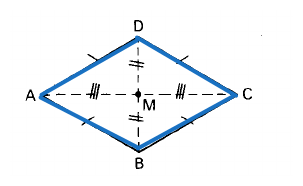
As by hypothesis $ABCD$ is a rhombus, this implies that $ABCD$ is a parallelogram, which implies $\overline{AM}\equiv \overline{CM}$ and $\overline{BM}\equiv \overline{DM}$.
Therefore,
$$\overline{AC} \perp \overline{BD}$$$\blacksquare$
As a consequence:
Every parallelogram that has perpendicular diagonals is a rhombus.
Square
The concept of a square dates back to antiquity, but it was the Greek mathematician Euclid who formalized its properties in his work “The Elements”.
Definition: A convex flat quadrilateral is a square if, and only if, it has four congruent angles and four congruent sides.
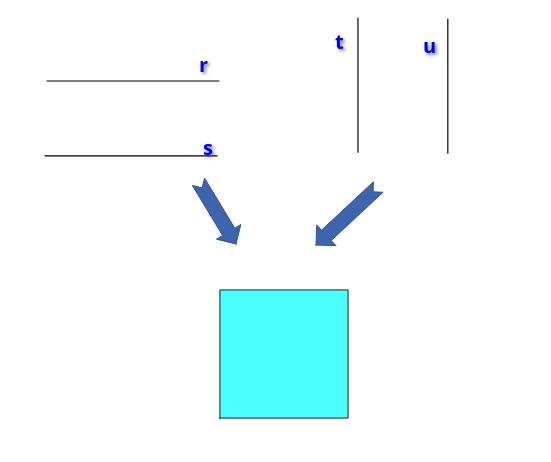
Square - perpendicular and congruent diagonals
The very important square property is:
Every square is a rectangle and is also a rhombus
Demonstration:
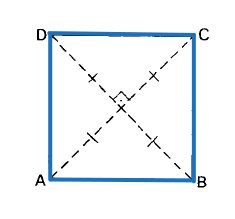
It is worth remembering that in addition to the properties of the parallelogram, it has the characteristic properties of rectangles and rhombuses.
Since $ABCD$ is square if and only if $ABCCD$ is parallelogram with
$$\overline{AC} \perp \overline{BD}\quad \text{e} \quad \overline{AC} \equiv \overline{BD}$$$\blacksquare$
Summary
In every convex quadrilateral that has diagonals that cut in half, then it is a parallelogram.
In every convex quadrilateral that has diagonals that cut in half and are congruent, then it is a rectangle.
In every convex quadrilateral that has diagonals that cut in half and are perpendicular, then it is a rhombus.
In every convex quadrilateral that has diagonals that cut in half, are congruent and are perpendicular, then it is a square.
This is a small introduction to the concepts of Rectangle, Rhombus and Square, wait for the next posts.