
Euler's Eyes
2024-07-12
Theorem for any triangles
In previous posts we talked about point power. The Sine Theorem is a fundamental mathematical tool in trigonometry, which establishes an important relationship between the sides of a triangle and the sines of its angles. This theorem is applicable to any type of triangle, be it acute, obtuse or scalene, and is essential for solving problems involving the geometry of triangles.
The Law of Sines states that, in any triangle, the ratio between the length of one side and the sine of the opposite angle is constant and equal for all three sides and angles of the triangle.
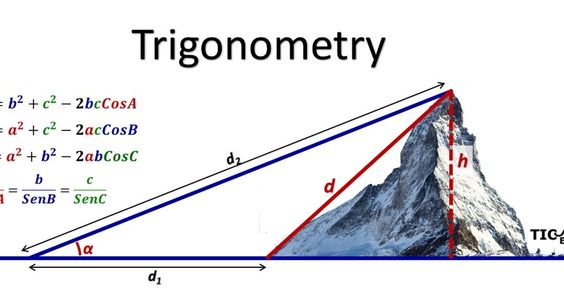
For example, imagine you are on an island and want to calculate the distance to two other islands visible on the horizon. By measuring the angles between the lines of sight to the two islands and the distance between you and a landmark on your own island, you can apply the Law of Sines to find the unknown distances.
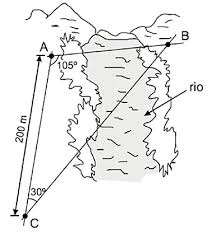
The Law of Sines is a fundamental theorem in trigonometry that relates the sides of a triangle to its opposite angles. Although it is a mathematical tool widely used today, its origins date back to the work of ancient mathematicians.
History
The history of the Law of Sines is fascinating, as its discovery cannot be attributed to a single mathematician. Instead, it is the result of centuries of study and contributions from various cultures. The Law of Sines, as we know it today, was formalized in the West during the Renaissance, but its roots can be traced back to Greek and Arab mathematicians.
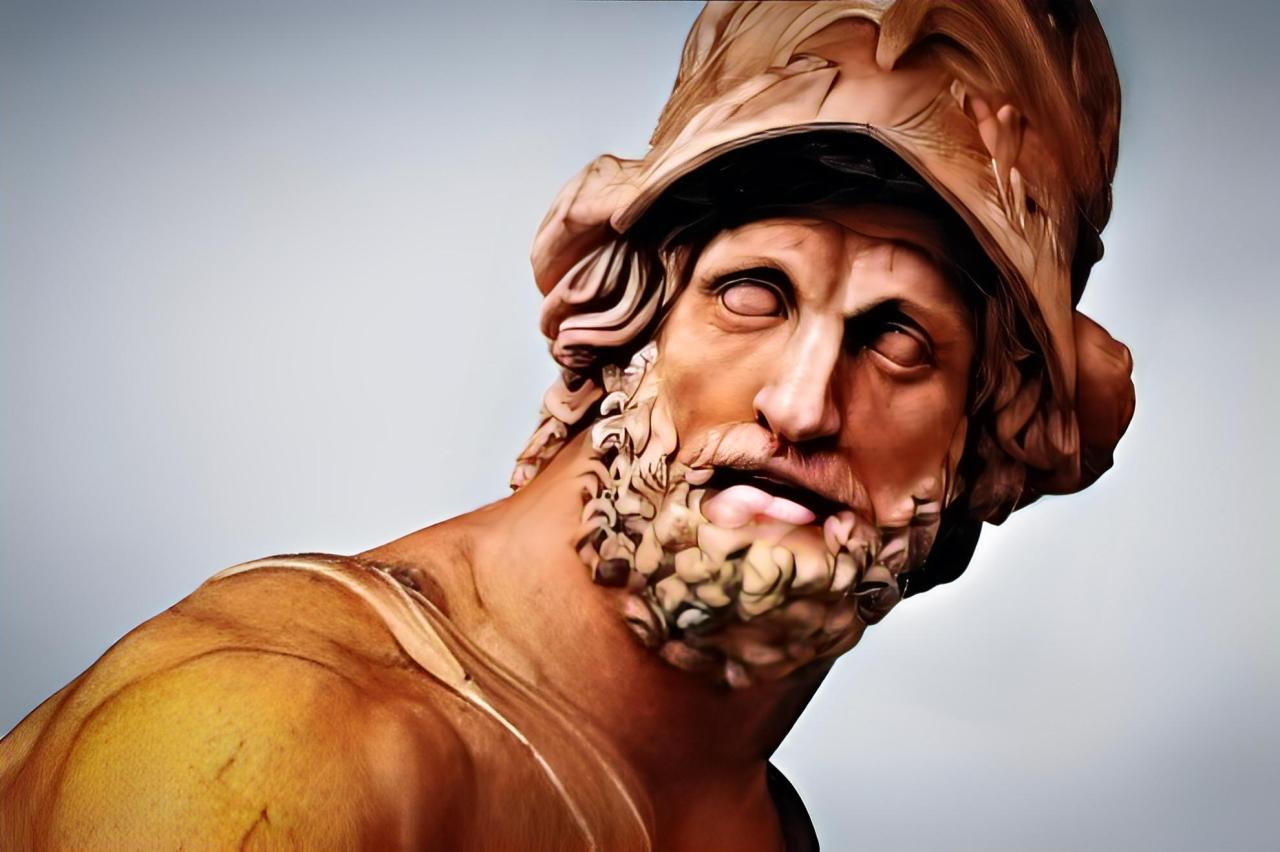
Ancient Greeks, such as Menelaus of Alexandria, made significant contributions to spherical trigonometry, which later influenced the development of the Law of Sines.
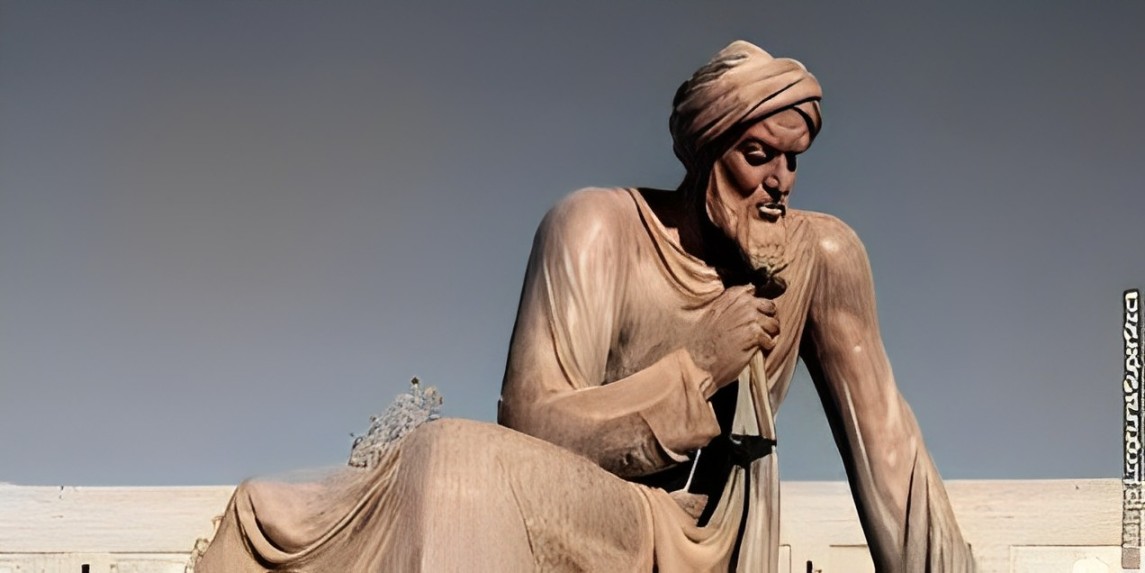
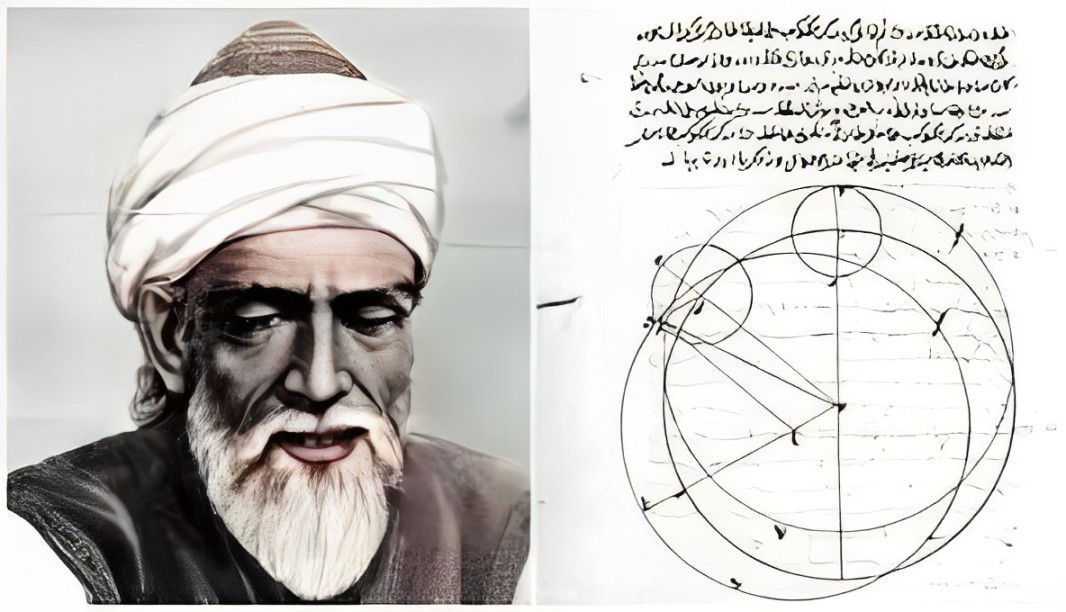
However, it was with medieval Islamic mathematicians that the Law of Sines began to take shape. Al-Khwarizmi, a Persian mathematician, made significant advances in mathematics and astronomy and contributed to what would eventually become the Law of Sines.
Another Islamic mathematician, Abu al-Wafa, was crucial to the development of trigonometry as an independent field of study. His work on trigonometric tables and relationships between the elements of a triangle helped lay the foundation for the Law of Sines.
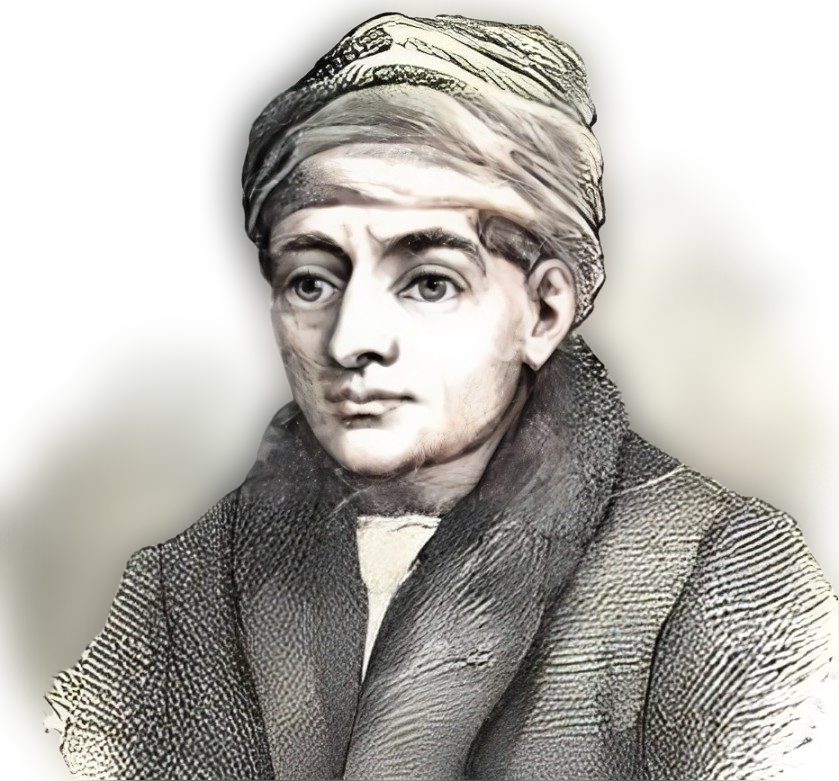
In Europe, it was the German mathematician Regiomontanus who, in the 15th century, contributed to the dissemination of trigonometric knowledge, including the Law of Sines, through his works and translations of Arabic texts.
Applications
The Law of Sines is a powerful mathematical tool with a variety of practical applications in many fields. Here are some of the ways the Law of Sines is used in the real world:
-
Navigation: The Law of Sines is crucial in sea and air navigation to calculate accurate routes. When navigators have a fixed reference point and two location angles, they can use the Law of Sines to determine the exact location of their ship or plane.

-
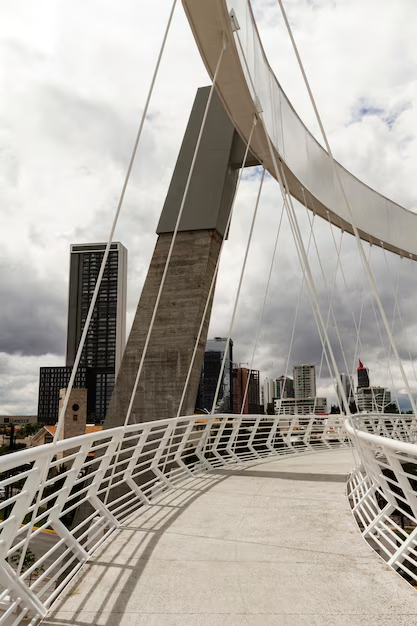
Engineering: Engineers often deal with structures that include triangular elements. The Law of Sines allows you to calculate unknown forces and dimensions in bridges, buildings and other structures.
-
Astronomy: Astronomers apply the Law of Sines to measure distances between stars and planets. For example, by observing the angle between two celestial objects from different points on Earth, they can calculate the distance to those objects.

-
Geodesy: In geodesy, which is the science of measuring and understanding the Earth, the Law of Sines is used to calculate distances between geographic points, which is essential for mapping and topographic surveys.
-
Architecture: Architects use the Law of Sines to design buildings with sloped ceilings, vaults, and other structural elements that require precise calculations of angles and distances.
-
Physics: In physics, the Law of Sines can be used to solve problems involving non-parallel forces and to find the resulting direction of several forces acting at a point.
-
Criminology: The Law of Sines is applied in criminology to reconstruct crime scenes, especially when it comes to calculating projectile trajectories or the position of objects in relation to reference points.

-
Art and Design: Artists and designers can apply the Law of Sines to create works that have a geometric basis, ensuring correct proportions and accurate perspectives.

-
Telecommunications: When installing telecommunications antennas and towers, the Law of Sines helps calculate angles and distances to optimize signal coverage.

-
Sports: In sports, especially in activities such as sailing or archery, the Law of Sines can be used to calculate trajectories and improve accuracy.

Sines theorem
Sine theorem: In any triangle, the sides of a triangle are proportional to the sines of the opposite angles and the constant of proportionality is the diameter of the circle circumscribed by the triangle.
Demonstration:
Let there be a triangle $ABC$ and a circumscribed circle, with $O$ the center of this circle of radius $R$.
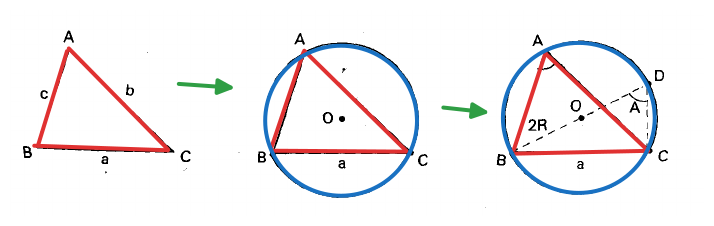
When plotting the diameter $\overline{BD}$, we have:
$$\hat{D}=\frac{\stackrel{\frown}{BD}}{2} \quad \text{e}\quad \hat{A}=\frac{\stackrel{\frown}{BD }}{2}$$From this, we obtain that $\hat{D}\equiv \hat{A}$. In the right triangle $DCB$ in $C$, it follows:
$$\sin D = \frac{a}{2R}$$$$\sin A = \frac{a}{2R}$$
$$2R = \frac{a}{\sin A}$$
Similarly, we have to
$$2R = \frac{b}{\sin B}$$$$2R = \frac{c}{\sin C}$$
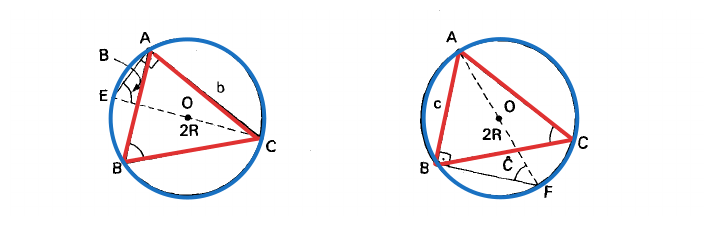
Therefore, we obtain the law of sines:
$$2R = \frac{a}{\sin A} = \frac{b}{\sin B} = \frac{c}{\sin C}$$
$\blacksquare$
Metric relationships
a) In any triangle, the square on the side opposite an acute angle is equal to the sum of the squares on the other two sides, minus twice the product of one of these sides and the projection of the other onto it.
$$a^2 = b^2 + c^2 - 2 mc $$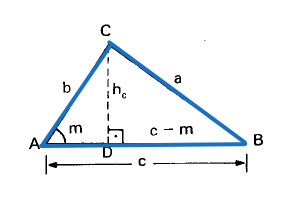
b) In any triangle, the square on the side opposite an obtuse angle is equal to the sum of the squares on the other two sides, plus twice the product of one of these sides and the projection of the other onto it or onto the line that contains it.
$$a^2 = b^2 + c^2 + 2 mc $$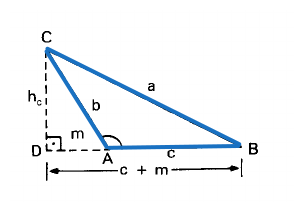
Demonstration:
Let $CD=h_c=$ height relative to the side $c$, from the triangle $CDB$ we have:
$$a^2 = h^2_c + (c\pm m)^2$$From triangle $CDA$ we have:
$$h^2_c = b^2 - m^2$$From the two equations we have:
$$a^2 = b^2 - \cancel{m^2} + c^2 \pm 2mc + \cancel{m^2}$$Therefore, we get:
$$a^2 = b^2 + c^2 - 2 mc $$or
$$a^2 = b^2 + c^2 + 2 mc $$$\blacksquare$
Cosine theorem
In any triangle, the square of one side is equal to the sum of the squares of the other two sides minus twice the product of these two sides and the cosine of the angle formed by them.
Demonstration:
Case 1:
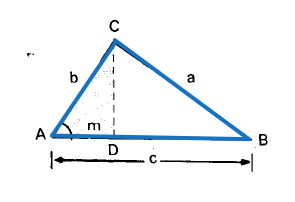
In triangle $ABC$ we have $a^2 = b^2 + c^2 - 2mc$ and in triangle $CDA$ we have:
$$\cos A = \frac{m}{b} \quad \Rightarrow \quad m = b~.~\cos A$$From the two equations we obtain:
$$a^2 = b^2 + c^2 - 2c(b~.~\cos A)$$Case 2:
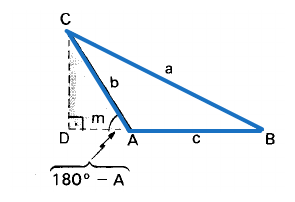
In triangle $ABC$ we have $a^2 = b^2 + c^2 + 2mc$ and in triangle $CDA$ we have:
$$\cos (180^\circ - A) = -\cos A = \frac{m}{b} \quad \Rightarrow \quad m = -b~.~\cos A$$From the two equations we obtain:
$$a^2 = b^2 + c^2 + 2c(-b~.~\cos A)$$Therefore, in both cases:
$$a^2 = b^2 + c^2 - 2bc~.~\cos A$$Similarly, for the other sides:
$$b^2 = a^2 + c^2 - 2ac~.~\cos B$$$$c^2 = a^2 + b^2 - 2ab~.~\cos C$$
$\blacksquare$
Recognition of the nature of a triangle
Let the measurements of the sides of a triangle be the largest of them called $a$, the other two called $b$ and $c$, satisfying:
$$|b-c|< a< b+c$$
The nature of a triangle, based on the definitions above:
- Acute triangle $a^2 < b^2 + c^2 $
- Right triangle $a^2 = b^2 + c^2 $ (Pythagorean theorem)
- Obtuse triangle $a^2 > b^2 + c^2 $
Solved exercises
- Determine the value of x:
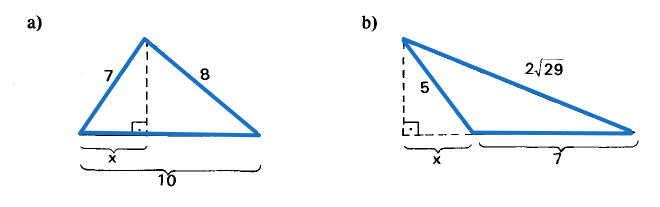
Resolution:
a) When using the metric relations $a^2 = b^2 + c^2 - 2 mc $
$$8^2 = 7^2 + 10^2 - 2 x~.~10 \quad \Rightarrow \quad x=\frac{17}{4}$$b) When using the metric relations $a^2 = b^2 + c^2 6 + 2 mc $
$$(2\sqrt{29})^2 = 5^2 + 7^2 + 2 x~.~7 \quad \Rightarrow \quad x=3$$
- Determine the value of x:
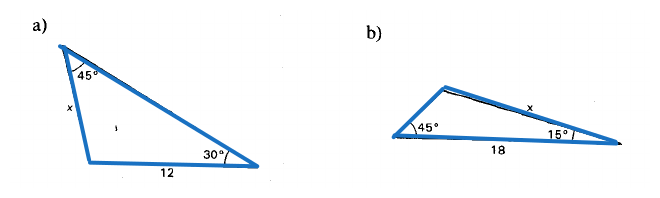
Resolution:
a) When using the law of sines $ \frac{a}{\sin A} = \frac{b}{\sin B} $
$$ \frac{x}{\sin 30^\circ} = \frac{12}{\sin 45^\circ} $$$$ \frac{x}{\frac{1}{2}} = \frac{12}{\frac{\sqrt{2}}{2}} $$
$$x = 6\sqrt{2} $$
b) When using the law of sines $ \frac{a}{\sin A} = \frac{b}{\sin B} $. It is worth remembering that the angle $\hat{B}=180^\circ-60^\circ = 120^\circ$
$$ \frac{x}{\sin 45^\circ} = \frac{18}{\underbrace{\sin 120^\circ}_{\sin 60^\circ}} $$$$ \frac{x}{\frac{\sqrt{2}}{2}} = \frac{18}{\frac{\sqrt{3}}{2}} $$
$$ x = 6\sqrt{6} $$
- Determine the radius of the circle circumscribed by the triangle in the cases:
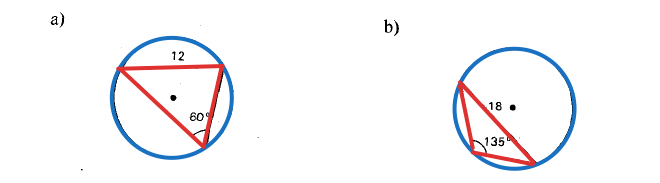
Resolution:
a) When using the law of sines $ \frac{a}{\sin A} = 2R $
$$ \frac{12}{\sin 60^\circ} = 2R \quad \Rightarrow \quad R =4\sqrt{3} $$b) When using the law of sines $ \frac{a}{\sin A} = 2R $.
$$ \frac{18}{\underbrace{\sin 135^\circ}_{\sin 45^\circ}} = 2R \quad \Rightarrow \quad R =9\sqrt{2} $$Considerations
The Law of Sines is a perfect example of how mathematical knowledge is accumulated over time, with each culture and era contributing to the body of knowledge we have today. It is a testament to international collaboration and the cumulative nature of science and mathematics. The Law of Sines not only helps us solve practical problems, but also connects us with the history of humanity and the intellectual legacy of many civilizations. Here a small contribution was made to theorems for any triangles, wait for the next posts.