
Euler's Eyes
2024-07-09
Segment angle
In previous posts we talked about inscribed angle. The segment angle is defined as the angle formed between a chord of a circle and the tangent to the circle at one of the ends of the chord. This angle can be seen as a special case of the inscribed angle, where the vertex of the angle is precisely on one of the points that define the arc.
To understand better, imagine a circle with a rope extended from one point to another. At one of the points where the rope touches the circle, draw a tangent line. The angle formed between this tangent and the chord is what we call the segment angle. An interesting property of this angle is that it is half the measure of the central angle that subtends the same arc.
For example, if we have a central angle of 80 degrees, the corresponding segment angle will be 40 degrees. This is due to the fact that the segment angle is essentially the ‘side view’ of the inscribed angle, which in turn is always half of the central angle.
Although there is no single mathematician credited with discovering the segment angle, this concept is often associated with the works of ancient Greek mathematicians such as Euclid and Archimedes. They laid the foundations of classical geometry in their works, and many of the theorems and principles they explored are still taught today.
The importance of segment angle extends beyond pure theoretical mathematics. It finds practical applications in various areas, such as engineering, architecture, and even art, where precision of shapes and proportions is essential.
Uses of the concept
In everyday life, segment angles can be observed in different situations. For example, a carpenter creating a picture frame needs to cut the ends of the wood at precise angles so that they fit together perfectly. Here, the segment angle ensures that the pieces join together without gaps, forming the desired straight corners for the frame.

Another practical application of segment angles is in construction. Professionals use instruments such as a square and level to ensure that walls and structures are perfectly aligned and angled. This is essential for the safety and stability of buildings.

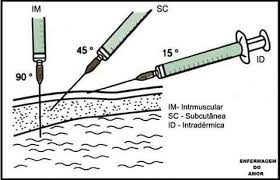
In healthcare, especially when administering injections, the segment angle is crucial. Depending on the type of injection, the needle insertion angle may vary to ensure the effectiveness of the medicine and the patient’s comfort.
Even at leisure, segment angles are present. Think of a football player who calculates the angle to make a pass or a shot on goal. The trajectory of the ball and the accuracy of the shot depend on the intuitive understanding of the angles formed between the ball, the player’s foot and the goal.

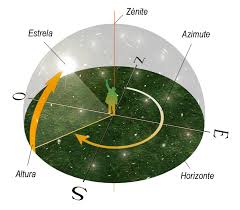
Furthermore, segment angles are fundamental in navigation and astronomy. Navigators use angles to calculate routes and directions, while astronomers use them to map the stars and planets in the sky.
Segment angle
Segment angle or semi-inscribed angle relative to a circle: is an angle that has a vertex on the circle, one side secant and the other side tangent to the circle.
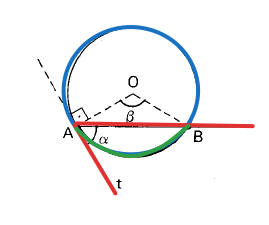
- $t\hat{A}B$ is segment angle
- $\stackrel{\frown}{AB}$ is the corresponding arc.
- $A\hat{O}B$ is the central angle corresponding to the semi-inscribed angle $t\hat{A}B$
Segment angle measurement
Theorem: A segment angle is half the corresponding central angle or the measure of a segment angle is half the measure of the corresponding arc.
$$\alpha=\frac{\beta}{2}\quad \text{ou}\quad \alpha= \frac{\stackrel{\frown}{AB}}{2}$$
Demonstration:
- Case 1: $t\hat{A}B$ is an acute angle
In the isosceles triangle $OAB$, let us calculate the measure of the angle $A$.
$$\hat{A} + \hat{B}+\beta=180^\circ$$$$\hat{A} + \hat{A}+\beta=180^\circ$$
$$2\hat{A}=180^\circ - \beta$$
$$\hat{A}=90^\circ - \frac{\beta}{2} \quad (1)$$
As $t$ is tangent to the circle:
$$\alpha + \hat{A} = 90^\circ$$$$\hat{A} = 90^\circ - \alpha \quad (2)$$
From (1) and (2) we obtain that:
$$\alpha = \frac{\beta}{2}$$Since $\beta= \stackrel{\frown}{AB}$, we also get:
$$\alpha = \frac{\stackrel{\frown}{AB}}{2}$$- Case 2: $t\hat{A}B$ is a right angle
$AB$ is a diameter and $\stackrel{\frown}{AB}=180^\circ$.
- Case 3: $t\hat{A}B$ is an obtuse angle.
With the supplementary adjacent angle of $t\hat{A}B$, it is the same as in case 1.
$\blacksquare$
Arc capable
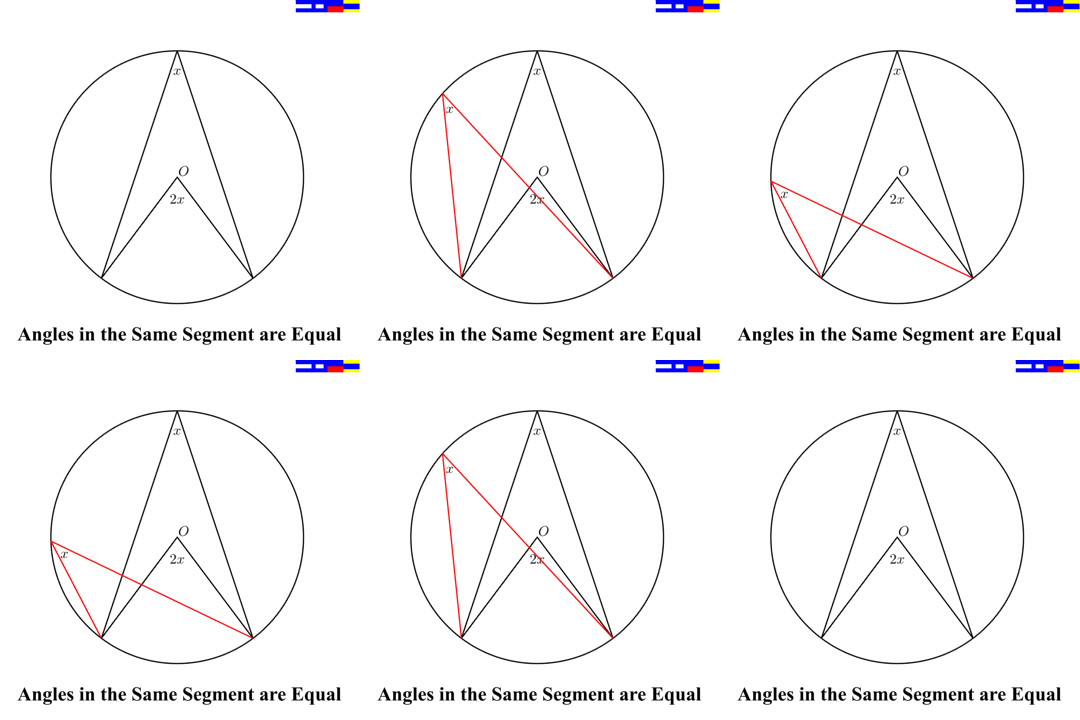
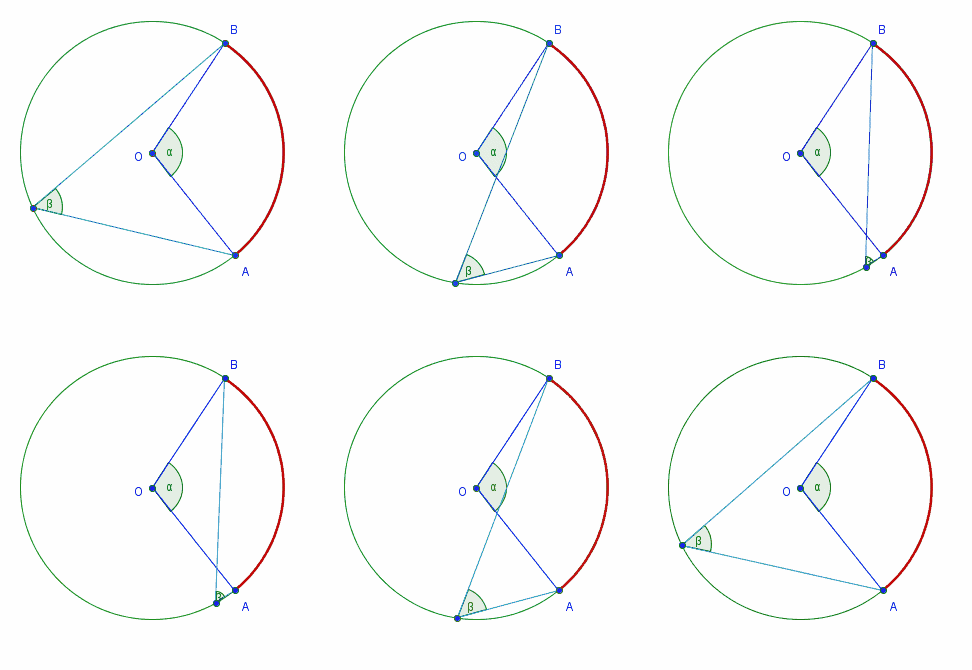
Arc capable of $\alpha$: Let there be a circle $\lambda$ with center $O$ and an angle of measure $\alpha$ and let $A\hat{O}B$ be a central angle of measure $\beta=2\alpha$. The vertices of the inscribed (or semi-inscribed) angles relative to $\lambda$ that have sides passing through $A$ and $B$, have measure $\alpha$ and are in an arc $\stackrel{\frown}{APB }$.
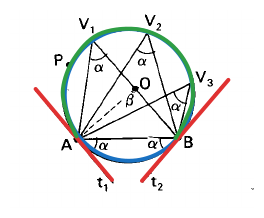
The angles $A\hat{V_1}B$, $A\hat{V_2}B$, $A\hat{V_3}B$, $t_1\hat{A}B$ and $t_2\hat{A}B $ have measure:
$$\alpha = \frac{\stackrel{\frown}{AB}}{2}$$
The arc $\stackrel{\frown}{APB}$ is the arc capable of $\alpha$
Inner eccentric angle
If two chords at a point interior to a circle, distinct from the center, then any of the angles they form is called interior eccentric angle.
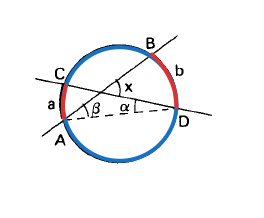
The measure of the interior eccentric angle is given by:
$$x = \frac{a+b}{2}$$where $a$ and $b$ are the measurements of the arcs $a=\stackrel{\frown}{AC}$ and $b=\stackrel{\frown}{BD}$.
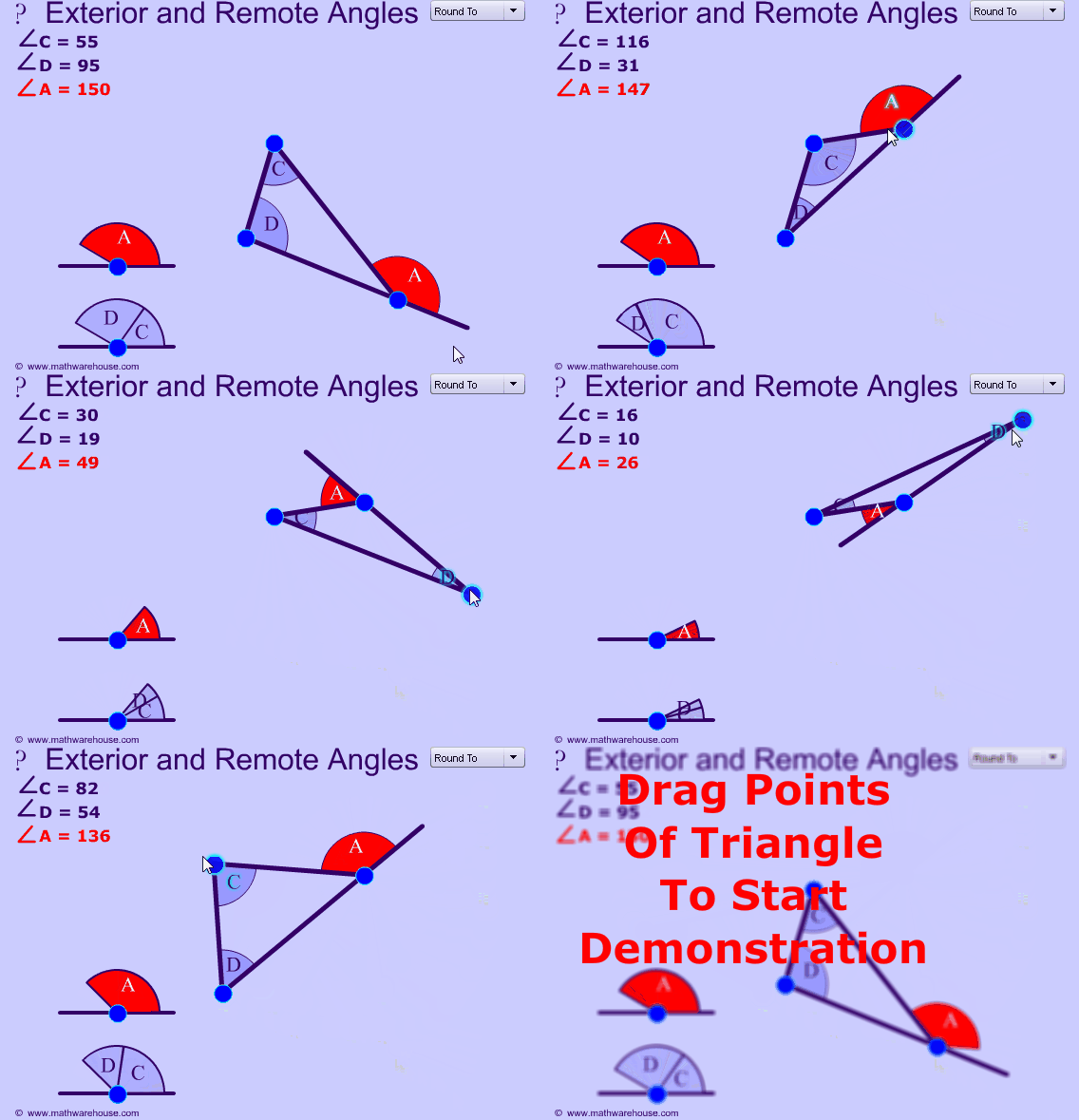
In fact, as $x$ is the exterior angle of the triangle (exterior angle theorem). $\alpha=\frac{a}{2}$ and $\beta=\frac{b}{2}$, as they are inscribed angles
In this way, we obtain:
$$x=\alpha+\beta=\frac{a}{2}+ \frac{b}{2}$$$$x=\frac{a+b}{2}$$
Exterior eccentric angle
Starting at a point outside a circle, we draw two half-straight lines, both secants to the circle, or both tangents or one secant and the other tangent, these half-lines form an angle that is called exterior eccentric angle.
The measure of the exterior eccentric angle is given by:
$$x = \frac{a-b}{2}$$where $a$ and $b$ are the measurements of the arcs $a$ and $b$.
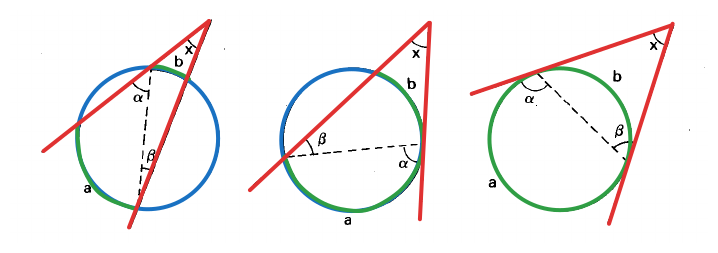
In fact, as $\alpha=\frac{a}{2}$ and $\beta=\frac{b}{2}$ are inscribed angles or angles of segments and $\alpha=x+\beta$ is an external angle of the triangle (theorem).
In this way, we obtain:
$$x=\alpha-\beta=\frac{a}{2}- \frac{b}{2}$$$$x=\frac{a-b}{2}$$
Considerations
In short, the segment angle is a wonderful example of how mathematical concepts can be both simple and profoundly complex. It helps us to better understand the relationship between the different parts of a circle and to apply this knowledge in a practical and effective way in various everyday situations. If you are a student or math enthusiast, exploring the world of segment angles can be both a challenging and rewarding journey. Here a small contribution was made to semi-inscribed angles in a circle, wait for the next posts.