
Euler's Eyes
2024-07-04
Inscribed angle
In previous posts we talked about properties of circular arcs. Now, we talk about angles inscribed in a circle. An inscribed angle is one whose vertex is on a circle and whose sides are secants that intersect the circle at two other distinct points. The most notable property of an inscribed angle is that its measure is equal to half the measure of the arc it subtends on the circumference.
History
One of the most significant contributions to geometry comes from the study of angles inscribed in a circle. This concept not only has practical applications in diverse areas such as engineering and design, but it also has a rich history of mathematical discoveries.
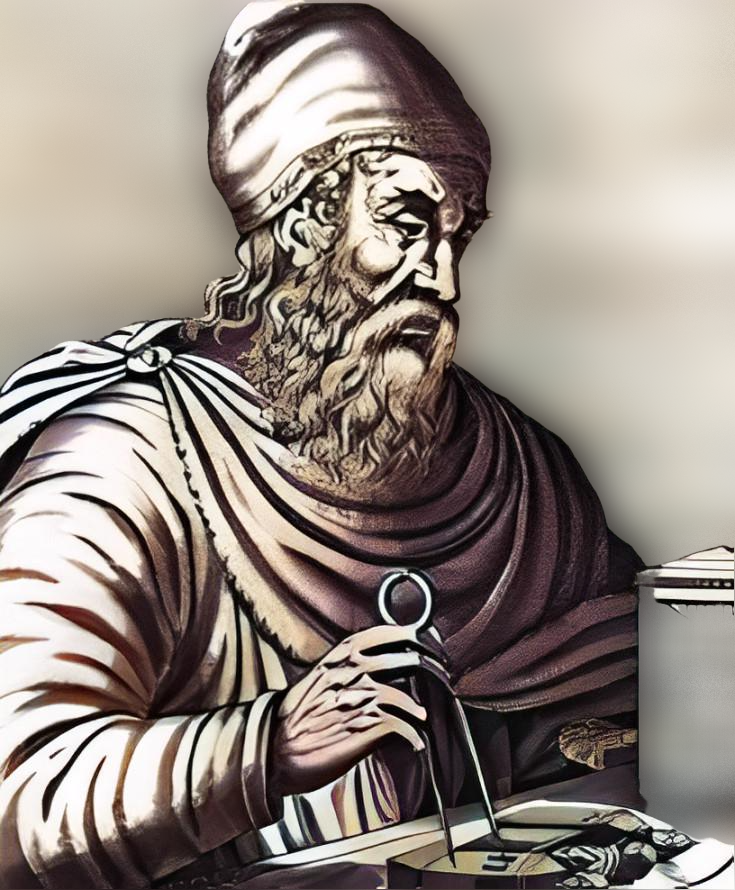
The most notable property of an inscribed angle is that its measure is always half the measure of the arc that it intersects on the circumference. This property was a fundamental discovery in geometry and is attributed to Ancient Greek mathematicians such as Euclid and Archimedes.
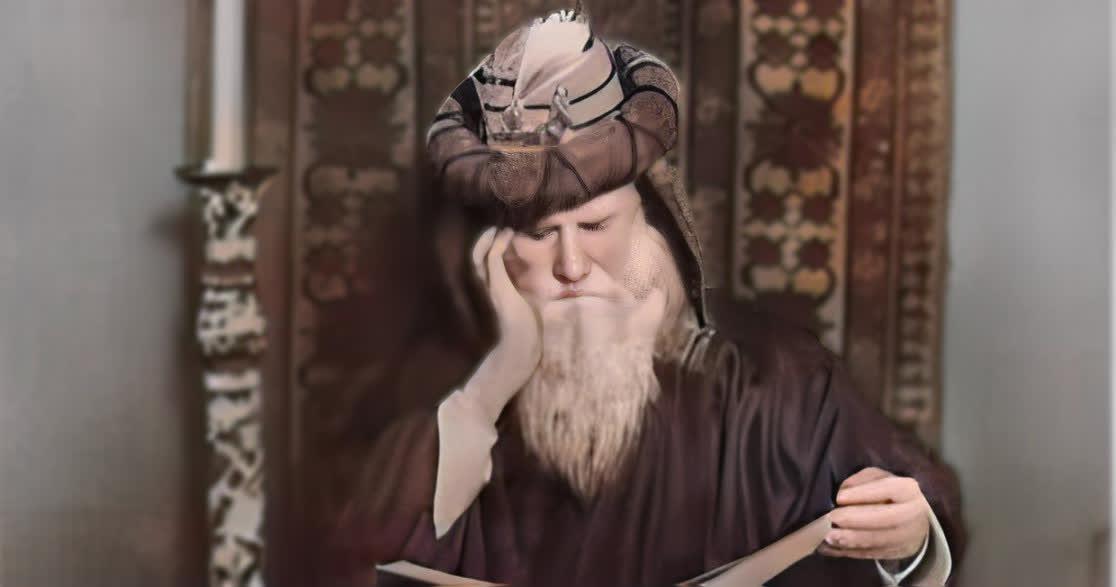
Over the centuries, many mathematicians have contributed to deepening our understanding of inscribed angles. For example, in the 12th century, the Persian mathematician Omar Khayyam described solving cubic equations using the intersection of parabolas and circles, a technique that depends on understanding the inscribed angles.
Uses of the concept
The angles inscribed in a circle are a fascinating area of study in geometry, and their applications go far beyond the classroom. In everyday life, these mathematical concepts are fundamental for a variety of practical and theoretical activities. Let’s explore some of these applications and understand how inscribed angles are integrated into our daily lives.
Navigation and Cartography
In navigation, whether sea or air, understanding the inscribed angles is crucial. Navigators use these angles to calculate routes and directions based on maps that are essentially projections of a sphere (the Earth) onto a plane. By understanding how an inscribed angle represents a specific arc on the circumference of a globe, they can determine the most efficient path between two points.

Architecture and Engineering
Architects and engineers are often faced with the challenge of designing structures that include circular elements such as arches and domes. Using inscribed angles allows you to calculate the exact curvature and dimensions needed so that these structures are not only aesthetically pleasing, but also stable and safe.
Technology and Design
In user interface design, especially on touchscreen devices, inscribed angles help create interactive circular graphic elements such as knobs and sliders. These elements are based on inscribed angles to determine position and movement within a virtual circle.
Art and Decoration
Artists and designers use the principles of inscribed angles to create works that include perfect circular shapes or circle segments. This can be seen in jewelry, tile patterns, and even more complex artistic compositions that involve radial symmetry and harmonious proportions.

Sports and Physical Activities
In sport, the analysis of movements that involve rotations and turns can be improved by understanding the angles involved. For example, in skateboarding or gymnastics, athletes perform maneuvers that, in essence, are segments of circular movements. Understanding these angles can help improve your technique and execution of these movements.

Education and Learning
In education, teaching about inscribed angles can be a way to connect students with practical applications of mathematics. Learning projects based on real problems can be developed to engage students and show how mathematics is present in many aspects of everyday life.

These are just some of the many applications of angles inscribed in a circle. The beauty of mathematics lies in its universe
Inscribed angle
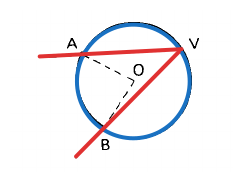
Definition (Inscribed angle relative to a circle): is an angle that has the vertex on the circle and the sides are secant to it.
| Description | Scheme |
|---|---|
|
|
Measure of the inscribed angle
An inscribed angle is half of the corresponding central angle.
or
The measure of an inscribed angle is half the measure of the corresponding arc.
Thus, we have the following theorem.
Theorem: Let $A\hat{V}B$ be the inscribed angle of measure $\alpha$ and $A\hat{O}B$ be the corresponding central angle of measure $\beta$, then
$$\alpha = \dfrac{\beta}{2} \quad \text{or} \quad\alpha = \dfrac{\stackrel{\frown}{AB}}{2}$$
Demonstration:
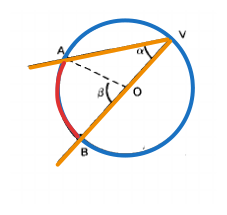
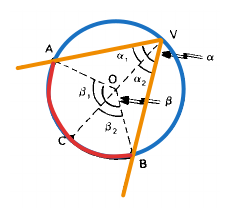
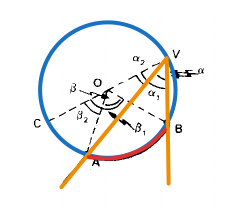
Let $A\hat{V}B$ be the inscribed angle of measure $\alpha$ and $A\hat{O}B$ be the corresponding central angle of measure $\beta$, let’s consider three cases:
| Case 1 | Case 2 | Case 3 |
|---|---|---|
|
|
|
- Case 1:
Note that $\overline{OV}\equiv \overline{OA}\equiv \text{ radius}$ implies that the triangle $OVA$ is isosceles. As a consequence $\hat{A}=\hat{V}=\alpha$ r $\beta$ is an external angle in the triangle $OVA$.
Still $\beta=\hat{A} + \hat{V}=\alpha+\alpha=2\alpha$
Soon,
$$\alpha =\frac{\beta}{2}=\frac{\stackrel{\frown}{AB}}{2}$$- Case 2:
With $C$ intersection point of $\overrightarrow{VO}$ with the circle and $A\hat{V}C=\alpha_1$, $A\hat{O}C=\beta_1$, $C\hat{ V}B=\alpha_2$, $C\hat{O}B=\beta_2$ we have that:
From case 1, we have that $\beta_1=2\alpha_1$ and $\beta_2=2\alpha_2$
Soon,
$$\alpha =\frac{\beta}{2}=\frac{\stackrel{\frown}{AB}}{2}$$- Case 3:
With $C$ intersection point of $\overrightarrow{VO}$ with the circle and $B\hat{V}C=\alpha_1$, $B\hat{O}C=\beta_1$, $A\hat{ V}B=\alpha_2$, $A\hat{O}B=\beta_2$ we have that:
From case 1, we have that $\beta_1=2\alpha_1$ and $\beta_2=2\alpha_2$
Therefore,
$$\alpha =\frac{\beta}{2}=\frac{\stackrel{\frown}{AB}}{2}$$$\blacksquare$
Angle inscribed in a semicircle
| Description | Scheme |
|---|---|
|
|
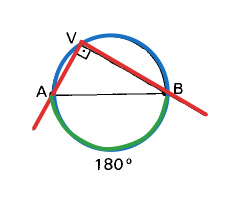
In fact, let $A\hat{V}B$ be inscribed with $90^\circ$ from the inscribed angle measure theorem we have
$$90^\circ = \frac{\stackrel{\frown}{AB}}{2}$$Therefore $\stackrel{\frown}{AB}=180^\circ$, which is a semicircle.
Conversely, let the triangle be $AVB$, with $A$ and $B$ the extremes of the semicircle with $\stackrel{\frown}{AB}=180^\circ$, we obtain that $A\hat{V}B= 90^\circ$.
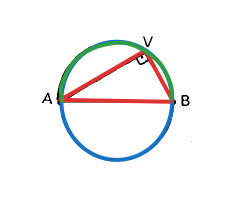
Therefore, the triangle $AVB$ is rectangular in $V$.
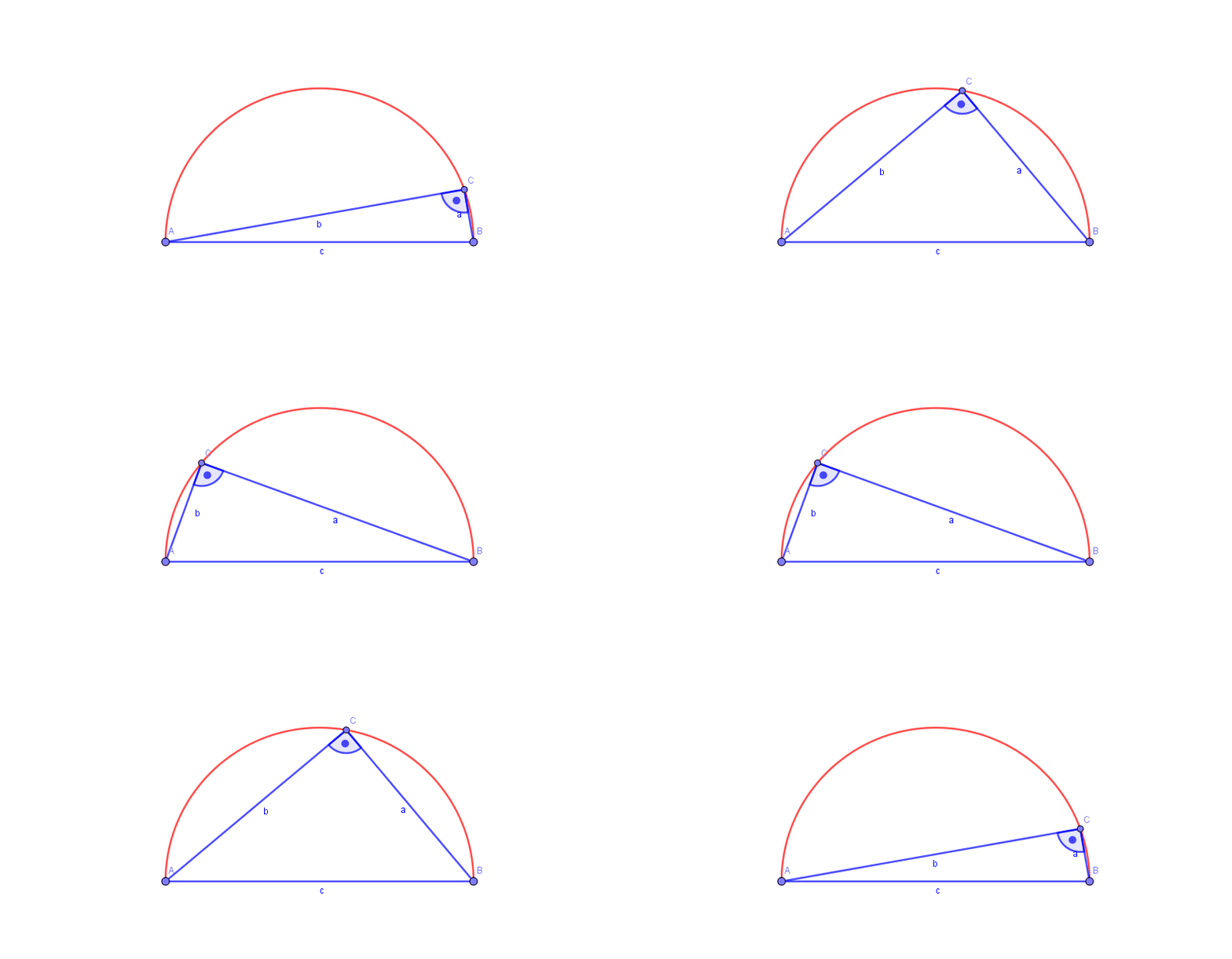
Every right angle is inscribed in a semicircle and, conversely, every angle inscribed in a semicircle, with sides passing through the ends, is a right angle.
Inscribable quadrilateral
A quadrilateral whose vertices are on a circle is a quadrilateral inscribed on the circle.
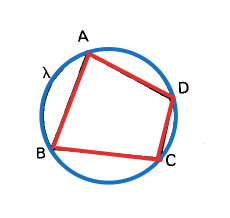
Proposition 1: If a convex quadrilateral is inscribed in a circle, then the opposite angles are supplementary.
Demonstration:
Let $\lambda$ be a circle. Since the angles $\hat{A}$ and $\hat{C}$ are inscribed, we have
$$\hat{A} =\frac{\stackrel{\frown}{BCD}}{2}$$$$\hat{C} =\frac{\stackrel{\frown}{DAB}}{2}$$
Hence we obtain that:
$$\hat{A}+ \hat{C}= \frac{\stackrel{\frown}{BCD}+\stackrel{\frown}{DAB}}{2}=\frac{360^\circ}{ 2} = 180^\circ$$Note that $\hat{A}+ \hat{B}+ \hat{C}+ \hat{D} = 360^\circ$. With this, we conclude that
$$\hat{B}+ \hat{D}= 180^\circ$$$\blacksquare$
Proposition 2: If a convex quadrilateral has supplementary opposite angles, it is not inscribable.
Demonstration:
Let $ABCD$ be a convex quadrilateral. Suppose $ABCD$ were not incredible, we consider $\lambda$ the circle through the points $A$, $B$ and $C$, it would not pass through $D$ and we would have a scheme as shown in the figure.
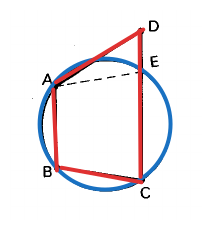
With $E$ the point of intersection of the straight line $\overleftrightarrow{CD}$ with $\lambda$ the quadrilateral $ABCE$ is inscribed.
With $ABCE$ inscribed it implies
$$\hat{B}+ \hat{E}= 180^\circ$$$$\hat{B}+ \hat{D}= 180^\circ$$
We obtain that $\hat{D}\equiv \hat{E}$ which is absurd according to the exterior angle theorem in the triangle $ADE$.
$\blacksquare$
Theorem: A necessary and sufficient condition for a convex quadrilateral to be inscribable is to have supplementary opposite angles.
Demonstration:
Let us use propositions 1 and 2.
$\blacksquare$
Solved Exercises
- If we have an arc of circumference that measures 72º. What is the measure of the inscribed angle?
Resolution: the inscribed angle that subtends this arc will have a measure of 36º, since $ 36º = \frac{72º}{2} $.
Considerations
Inscribed angles are a window into the world of geometry and its many applications. They show us how mathematics is not only theoretical, but also incredibly practical and relevant to our everyday lives. By studying inscribed angles, we open our minds to better understand the space and shapes around us. Here a small contribution was made to angles inscribed in a circle, wait for the next posts.