Thales' theorem
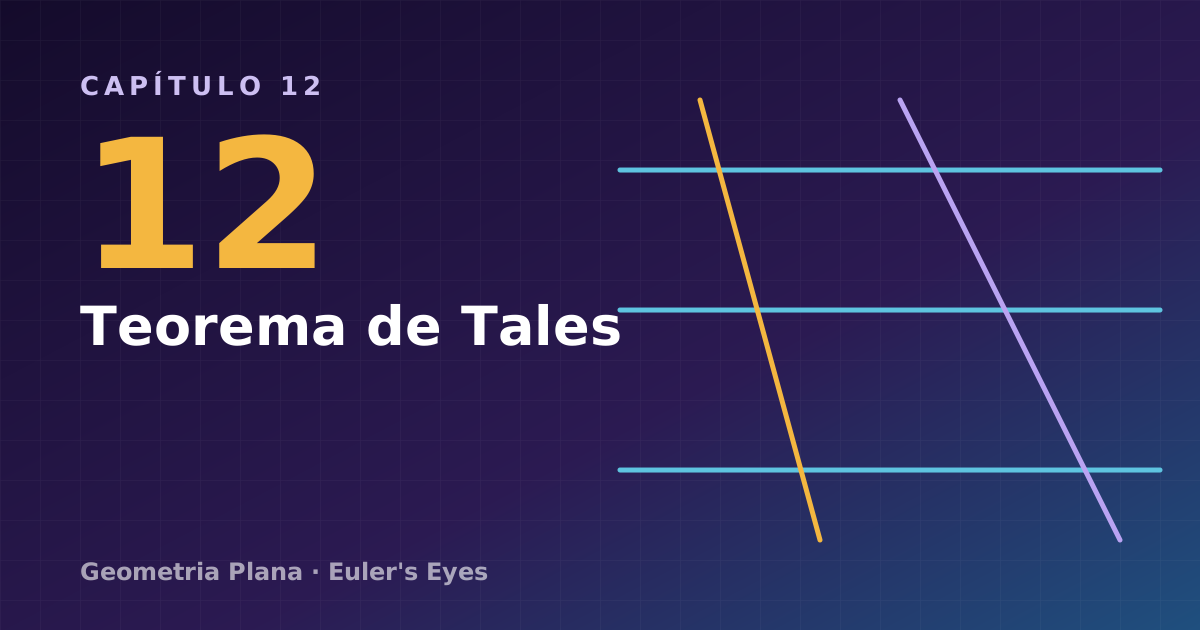
A bundle of parallel lines cuts two transversals into proportional parts. It is with this idea that a board is divided into equal parts without doing any math.
Who discovered The result is called Tales of Miletus (6th century BC), associated by tradition with the measurement of the height of the Great Pyramid by shadows (see the curiosity about it at the opening of the chapter). The demonstration we know is from Euclid, in proposition VI.2 of The Elements (c. 300 BC), and uses areas of triangles. The name “Tales’ theorem” for this result is a tradition in countries such as Brazil, Portugal, France, Spain and Italy; in German and English, the same name refers to the angle inscribed in the semicircle.