Logo Euler's Eyes
  • Dark Theme
    Light Theme Dark Theme System Theme
Logo Inverted Logo
  • Tags
  • 1 Phase
  • 1st Phase
  • 2 Phase
  • 2 Phase,
  • 2nd Phase
  • 2° Degree Equation
  • Alan Turing
  • Algebra
  • Algebraic Expressions
  • Analysis
  • Analytic Geometry
  • Analytical Geometry
  • Angle Bisector
  • Angle Measurements
  • Angles
  • Apothem
  • Arc Capable
  • Arc Properties
  • Archimedes
  • Area
  • Arithmetic Progression
  • Artificial Intelligence
  • Axioms and Postulates
  • Basic Concepts of Statistics
  • Bernoulli
  • Bhaskara
  • Binary Numbers
  • Binomial
  • Biography
  • Calculating Machine
  • Calculation
  • Calculus
  • Calculus of Variations
  • Cartesian Plane
  • Cartesian Product of Sets
  • Cauchy
  • Central Angle
  • Centroid
  • Children
  • Circle
  • Circle Area
  • Circumcenter
  • Circumference
  • Circumference Ratio
  • Circumferences
  • Circumscript Segments
  • Classification in Mathematics
  • Combinatorial Analysis
  • Combinatorics
  • Comparison of Angles
  • Complement
  • Complex Numbers
  • Compound Interest
  • Computing
  • Concave Region
  • Congruence
  • Congruence of Triangles
  • Convex Region
  • Correspondence Law
  • Cosine Theorem
  • Count
  • Cryptography
  • Decision Theory
  • Demo
  • Derivative
  • Descartes
  • Diagonals
  • Diamond
  • Differential Equations
  • Dispersion Measures
  • Distance
  • Division
  • Domain and Image
  • Einstein
  • Elasticity
  • Electromagnetism
  • Elementary Descriptive Statistics
  • Elementary School I
  • Elementary School II
  • ENEM 2021
  • ENEM 2022
  • ENEM 2023
  • ENEM 2024
  • ENEM 2025
  • Entrance Exam
  • Equality
  • Equations
  • Equiprobable Events
  • Equivalence Between Sets
  • Equivalence Relations
  • Euclid
  • Euclid's Postulate
  • Euler
  • Euler Project
  • Even Numbers
  • Exercises for Adding Natural Numbers
  • Exponential Function
  • External Angles
  • Fees
  • Fermat
  • Fermat's Last Theorem
  • Financial Mathematics
  • First Degree Equations
  • First Degree Functions
  • Flat
  • Flat Figures
  • Flat Geometry
  • Fractions
  • Function Concept
  • Function Discovery
  • Functions
  • FUVEST 2021
  • FUVEST 2022
  • FUVEST 2023
  • FUVEST 2024
  • FUVEST 2025
  • FUVEST 2026
  • Galois
  • Game Theory
  • Gauss
  • Geometric Constructions
  • Geometric Shapes
  • Geometry
  • Geometry With Natural Numbers
  • Geometry With Sequences of Numbers
  • Golden Segment
  • Graph Reading
  • Graphics
  • Graphs for Integers
  • Gravitation
  • Greatest Common Divisor
  • Group Theory
  • Groups
  • Hamilton
  • Height
  • History of Mathematics
  • Incenter
  • Increases and Discounts
  • Inequalities
  • Inscribable Quadrilateral
  • Inscribed Angle
  • Integral
  • Internal Angles
  • Interval Operations
  • Intervals
  • Introduction
  • Introduction to Angles
  • Introduction to Circumference
  • Introduction to Function Theory
  • Introduction to Geometry
  • Introduction to Integers
  • Introduction to Logarithm Table
  • Introduction to Polygons
  • Introduction to Probability
  • Introduction to Quadrilaterals
  • Introduction to Radiciation
  • Introduction to Rational Numbers
  • Introduction to Real Numbers
  • Introduction to Sets
  • Introduction to Statistics
  • Introduction to Triangles
  • Johann Bernoulli
  • John Napier
  • John Nash
  • Kids
  • Lagrange
  • Language
  • Law of Cosines
  • Law of Sines
  • Least Common Multiple
  • Leibniz
  • Level 1
  • Level 2
  • Level 3
  • Limit
  • Linear Systems
  • Logarithm
  • Logarithm Properties
  • Logarithms
  • Logic
  • Magnification
  • Math Elements
  • Mathematical Biology
  • Mathematical Logic
  • Mathematical Notation
  • Mathematical Programming
  • Mathematics Education
  • Mathematics Elements
  • Mathematics for Children
  • Mathematics for Kids
  • Matrices
  • Maxwell
  • Measure
  • Mechanics
  • Medium Base
  • Metric Relationships
  • Midpoint
  • Modular Function
  • Multiplication
  • Napier
  • Natural Number Subtraction Exercises
  • Newton
  • Niels Henrik Abel
  • Notable Points of the Triangle
  • Notation
  • Notion of Infinity
  • Notions of Probability
  • Nth Root
  • Number And
  • Number Theory
  • Number Π
  • Numbering Systems
  • Numerical Calculation
  • Numerical Methods
  • OBMEP
  • OBMEP 2023
  • Obmep,
  • Odd Numbers
  • Operations With Rational Numbers
  • Operations With Sets
  • Operations With Venn-Euler Diagrams
  • Optics
  • Optimization
  • Orthocenter
  • Parallelism
  • Parallelogram
  • Parallels
  • Partial Derivatives
  • Pascal
  • Pascal's Triangle
  • Peano Axioms
  • Peirce
  • Percentage
  • Percentage Basics
  • Perimeter
  • Perpendicular Bisector
  • Perpendicularity
  • Perpendiculars
  • Philosophy
  • Physical
  • Physics
  • Pi Number
  • Pi Numbers
  • Pitot
  • Plane Geometry
  • Point
  • Point Power
  • Polygons
  • Polynomials
  • Position Measurements
  • Position Relative to the Circumference
  • Postulates
  • Potentiation of Integers
  • Power With Negative Exponent
  • Prime Numbers
  • Primitive Notions
  • Principia
  • Probability
  • Progressions
  • Proof
  • Properties
  • Properties of Polygons
  • Proportion
  • Proportionality
  • Proportions
  • Proportions and Geometry
  • Pure Mathematics
  • Pythagoras Theorem
  • Pythagorean Suits
  • Quadratic Function
  • Quadrilateral
  • Quadrilaterals
  • Quantifier
  • Quantity Analysis
  • Quaternions
  • R Programming
  • Real Numbers
  • Rectangle
  • Rectangle Triangles
  • Reduction
  • Reflection
  • Regions in Planes
  • Regular Polygons
  • Relations
  • Relationship Properties
  • Relativity
  • Rhombus
  • Right Angle
  • Right Triangle
  • Right Triangle Relationships
  • Rule of 3
  • Rule of Three
  • Saussure
  • Segment Angle
  • Semi-Inscribed Angle
  • Semi-Straight
  • Semiotics
  • Sequences
  • Series
  • Set Family
  • Set Partition
  • Set Theory
  • Signal Rule
  • Similarity
  • Similarity of Triangles
  • Simple Interest
  • Sines Theorem
  • Sophie Germain
  • Spatial Geometry
  • Square
  • Square Root
  • Statistic
  • Stewart Ratio
  • Straight
  • Straight Lines
  • Straight Segment
  • Sum of Angles
  • Supplement
  • Symmetry
  • Tangent
  • Thales' Theorem
  • The Number Zero
  • Theorems
  • Trapezium
  • Trapezius
  • Triangle
  • Triangles
  • Triangular Inequality
  • Trigonometry
  • Truth Table
  • Understanding Relationships
  • Vectors
  • Venn-Euler Diagrams
  • Whole Numbers
  • Wiles
  • Women in Mathematics
  • Year 2018
  • Year 2019
  • Year 2021
  • Year 2022
  • Évariste Galois
Hero Image
Pythagorean Suits

Pythagorean suits are important in architectural constructions, which aroused the interests of the Greeks. They were extremely important, thanks to them we have one of the most beautiful and lasting architectures, which survives to this day. The Pythagorean suits Initially, let’s define what the Pythagorean suit is. Definition (Pythagorean Terno): is any set of natural numbers $x,y$ and $z$ (terns) such that: $$x^2 + y^2 = z^2$$ This definition was used by Euclid in Alexandria, who used concepts from the Pythagorean theorem, which corresponds to the right triangle:

October 21, 2022 Read
Hero Image
Ranges in real numbers

Open and closed doors on the straight Include and exclude endpoints. How do interval and inequality symbols change? Explore the controls and explain what changed in your own words. Ative o JavaScript para ver esta figura interativa. The intervals will be represented as a subset of the real numbers or better known as the straight line. These subsets are infinite, because no matter how many smaller intervals you take, they will still be infinite. Unlike the set of natural numbers or integers.

October 19, 2022 Read
Hero Image
Inequalities of real numbers

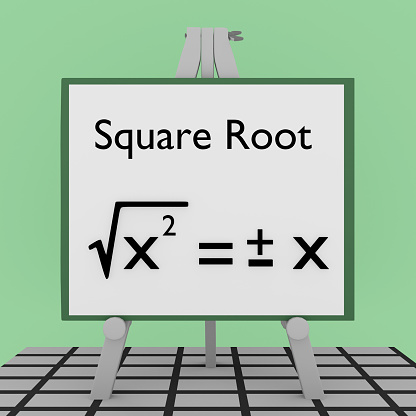
So far, we have only worked with equalities, in equations we work with scales, which is the notion of balance. In this post we will work with the opposite, that is, imbalance. Difference between equality and inequality To illustrate the notion of equality and inequality, look at the following sentences: Letícia is 2 years older than Alexandre (equality); Letícia is at least 2 years older than Alexandre (inequality). In this case, we have different meanings. Let $L$ be Letícia and $A$ be Alexandre, we can write the sentences as:
October 17, 2022 Read
Hero Image
Notion of Infinity

Infinity is an old discussion, around the 5th century BC with Zeno’s paradox. It was only during the Renaissance around the 15th century AD that this concept reappeared and in this post, we will talk about it. One of the applications is the law of never dividing by zero. The Infinity The concept of infinity was first studied by some famous mathematicians, such as: Marin Mersenne, friend of Descartes; Adrien-Marie Legendre; *James Joyce; John Wallis, creator of the infinity symbol (\(\infty\)).

October 17, 2022 Read
Hero Image
2° degree equation

In the previous post, the technique used by Bhãskara to solve 2th degree equations was shown. Many mathematicians between the 15th and 17th centuries developed different forms for 2th degree equations. One of them was François Viète (1540-1603). Proposal by François Viète François Viète, inspired by Bhãskara, used the shared scarf method, which we will demonstrate in the next topic. François Viète Excerpt from some of the topics studied by François Viète.

October 15, 2022 Read
Hero Image
Compound interest and Euler's number

John Napier was so important for applications in finance that he motivated Leonhard Euler to venture into this area. One of the irrational numbers most important with application in finance, is due to these two mathematicians. Compound Interest The history of compound interest and the number $e$ was thanks to Jacques Bernoulli between (1654-1705), who became interested in discovering the maximum value of interest on loans using the compound interest technique.

October 15, 2022 Read
Hero Image
Bhaskara

One of the biggest traumas for school children in modern times is the second-degree equation, where they make them memorize formulas. This memorize make students hate math. Notice what it is like to teach in a modern school. The equation of 2° degree is given by: $$ax^2 + bx + c = 0$$ in which $$\Delta = b^2 - 4ac$$From this, we obtain that the roots of Bhãskara’s equation: $$x = \frac{-b\pm \sqrt{\Delta}}{2a}$$ Bhãskara’s work The work of Bhãskara(around 1070 AD), which cites the writings of Śridhara (around 1030 AD), is what went down in history as the author of solving the equations of 2° degree. The first to work on this topic was Al-Khowarizm, in approximately 1000 AD, who is cited by Śridhara.

October 14, 2022 Read
Hero Image
Simple Interest

The Sumerians were the first to use concepts of contracts, invoices, receipts, and rudimentary credits. They started the concept of finance after the Babylonians around 2000 BC (Hammurabi’s code), with the concept of interest that was paid with seeds or other goods. The emergence of coins was around the 7th century BC. C. in Lydia, present-day Türkiye. Over time, the accumulation of these coins began to be a problem, as they could lose control of how much they had saved. The concept of a bank began to emerge with this problem.

October 14, 2022 Read
Hero Image
Increases and Discounts

Since childhood, the notion of finances is important, even if simple. The starting point is to learn about percentage increases and discounts. This concept can be applied to the price of goods, among others. Correction factor The beginning of the concept of increase and discount is given by a correction factor, applied to the price or to something that is increased or decreased. Let $p$ be the percentage applied to the price of the merchandise. Thus, the correction factor $f_c$ is given by:

October 10, 2022 Read
Hero Image
Equiprobable Events

In this post we will talk about equiprobable events. This concept is what we cover in teaching children and is the starting point for the concept of probability. What is an equiprobable event? Equiprobable events are events with the same probability of occurring, that is, they have the same chance of occurring. It appears a lot in probability theory. This way, we will define it as: Definition (Equiprvable Events): Let there be a sample space $\Omega$ and a random experiment from this space. When we take a class of events from this finite space $\mathcal{A}=\\{e_1, e_2,\dots,e_n\\}$. Events are equiprobable if these events have the same probability of occurring. $$\mathbb{P}(e_1) = \mathbb{P}(e_1) = \dots = \mathbb{P}(e_n) =\dfrac{\text{número de eventos favoráveis} }{\text{total de casos} }$$

October 8, 2022 Read
Hero Image
Introduction to Real Numbers

The first model for real numbers was proposed by the Greeks, from Pythagoras to Euclid. The beginning of everything came with irrational numbers, like $\sqrt{2}$ and $\pi$. Evolution of number concepts In this book for children we begin the construction of the entire sequence until the introduction to real numbers. We start with concepts of counting and measuring with natural numbers, which is the starting point for building the number line.

October 3, 2022 Read
Hero Image
Introduction to Radiciation

Not every root is irrational Test 4, 9 and 16 within the root. Compare with 2, 3 and 5. Explain the difference. Explore the controls and explain what changed in your own words. Ative o JavaScript para ver esta figura interativa. For many children the square root of a complex number and many teachers scare children by saying that it is something very complex. However, if we know where this term comes from, it is not something complex. Quite the contrary, it is simple and intuitive. This is information that has been lost over time, that is, we have become a sterile notation. The reader will see that semiotically active notations are those that evolved for the advancement of mathematics. The square root from the perspective of the Latin language (Latin) radix quadratum 4 aequalis 2, which we translate as the side of the square of area 4 is equal to 2.

October 1, 2022 Read
  • ««
  • «
  • 3
  • 4
  • 5
  • 6
  • 7
  • »
  • »»
Navigation
  • Start here
  • Recent posts
  • About Euler
  • App
  • Privacy
Contact me:
  • hirowat2@gmail.com

Euler's Eyes
© 2021 Euler Eyes.
Powered by Hugo Logo