Logo Euler's Eyes
  • Dark Theme
    Light Theme Dark Theme System Theme
Logo Inverted Logo
  • Tags
  • 1 Phase
  • 1st Phase
  • 2 Phase
  • 2 Phase,
  • 2nd Phase
  • 2° Degree Equation
  • Alan Turing
  • Algebra
  • Algebraic Expressions
  • Analysis
  • Analytic Geometry
  • Analytical Geometry
  • Angle Bisector
  • Angle Measurements
  • Angles
  • Apothem
  • Arc Capable
  • Arc Properties
  • Archimedes
  • Area
  • Arithmetic Progression
  • Artificial Intelligence
  • Axioms and Postulates
  • Basic Concepts of Statistics
  • Bernoulli
  • Bhaskara
  • Binary Numbers
  • Binomial
  • Biography
  • Calculating Machine
  • Calculation
  • Calculus
  • Calculus of Variations
  • Cartesian Plane
  • Cartesian Product of Sets
  • Cauchy
  • Central Angle
  • Centroid
  • Children
  • Circle
  • Circle Area
  • Circumcenter
  • Circumference
  • Circumference Ratio
  • Circumferences
  • Circumscript Segments
  • Classification in Mathematics
  • Combinatorial Analysis
  • Combinatorics
  • Comparison of Angles
  • Complement
  • Complex Numbers
  • Compound Interest
  • Computing
  • Concave Region
  • Congruence
  • Congruence of Triangles
  • Convex Region
  • Correspondence Law
  • Cosine Theorem
  • Count
  • Cryptography
  • Decision Theory
  • Demo
  • Derivative
  • Descartes
  • Diagonals
  • Diamond
  • Differential Equations
  • Dispersion Measures
  • Distance
  • Division
  • Domain and Image
  • Einstein
  • Elasticity
  • Electromagnetism
  • Elementary Descriptive Statistics
  • Elementary School I
  • Elementary School II
  • ENEM 2021
  • ENEM 2022
  • ENEM 2023
  • ENEM 2024
  • ENEM 2025
  • Entrance Exam
  • Equality
  • Equations
  • Equiprobable Events
  • Equivalence Between Sets
  • Equivalence Relations
  • Euclid
  • Euclid's Postulate
  • Euler
  • Euler Project
  • Even Numbers
  • Exercises for Adding Natural Numbers
  • Exponential Function
  • External Angles
  • Fees
  • Fermat
  • Fermat's Last Theorem
  • Financial Mathematics
  • First Degree Equations
  • First Degree Functions
  • Flat
  • Flat Figures
  • Flat Geometry
  • Fractions
  • Function Concept
  • Function Discovery
  • Functions
  • FUVEST 2021
  • FUVEST 2022
  • FUVEST 2023
  • FUVEST 2024
  • FUVEST 2025
  • FUVEST 2026
  • Galois
  • Game Theory
  • Gauss
  • Geometric Constructions
  • Geometric Shapes
  • Geometry
  • Geometry With Natural Numbers
  • Geometry With Sequences of Numbers
  • Golden Segment
  • Graph Reading
  • Graphics
  • Graphs for Integers
  • Gravitation
  • Greatest Common Divisor
  • Group Theory
  • Groups
  • Hamilton
  • Height
  • History of Mathematics
  • Incenter
  • Increases and Discounts
  • Inequalities
  • Inscribable Quadrilateral
  • Inscribed Angle
  • Integral
  • Internal Angles
  • Interval Operations
  • Intervals
  • Introduction
  • Introduction to Angles
  • Introduction to Circumference
  • Introduction to Function Theory
  • Introduction to Geometry
  • Introduction to Integers
  • Introduction to Logarithm Table
  • Introduction to Polygons
  • Introduction to Probability
  • Introduction to Quadrilaterals
  • Introduction to Radiciation
  • Introduction to Rational Numbers
  • Introduction to Real Numbers
  • Introduction to Sets
  • Introduction to Statistics
  • Introduction to Triangles
  • Johann Bernoulli
  • John Napier
  • John Nash
  • Kids
  • Lagrange
  • Language
  • Law of Cosines
  • Law of Sines
  • Least Common Multiple
  • Leibniz
  • Level 1
  • Level 2
  • Level 3
  • Limit
  • Linear Systems
  • Logarithm
  • Logarithm Properties
  • Logarithms
  • Logic
  • Magnification
  • Math Elements
  • Mathematical Biology
  • Mathematical Logic
  • Mathematical Notation
  • Mathematical Programming
  • Mathematics Education
  • Mathematics Elements
  • Mathematics for Children
  • Mathematics for Kids
  • Matrices
  • Maxwell
  • Measure
  • Mechanics
  • Medium Base
  • Metric Relationships
  • Midpoint
  • Modular Function
  • Multiplication
  • Napier
  • Natural Number Subtraction Exercises
  • Newton
  • Niels Henrik Abel
  • Notable Points of the Triangle
  • Notation
  • Notion of Infinity
  • Notions of Probability
  • Nth Root
  • Number And
  • Number Theory
  • Number Π
  • Numbering Systems
  • Numerical Calculation
  • Numerical Methods
  • OBMEP
  • OBMEP 2023
  • Obmep,
  • Odd Numbers
  • Operations With Rational Numbers
  • Operations With Sets
  • Operations With Venn-Euler Diagrams
  • Optics
  • Optimization
  • Orthocenter
  • Parallelism
  • Parallelogram
  • Parallels
  • Partial Derivatives
  • Pascal
  • Pascal's Triangle
  • Peano Axioms
  • Peirce
  • Percentage
  • Percentage Basics
  • Perimeter
  • Perpendicular Bisector
  • Perpendicularity
  • Perpendiculars
  • Philosophy
  • Physical
  • Physics
  • Pi Number
  • Pi Numbers
  • Pitot
  • Plane Geometry
  • Point
  • Point Power
  • Polygons
  • Polynomials
  • Position Measurements
  • Position Relative to the Circumference
  • Postulates
  • Potentiation of Integers
  • Power With Negative Exponent
  • Prime Numbers
  • Primitive Notions
  • Principia
  • Probability
  • Progressions
  • Proof
  • Properties
  • Properties of Polygons
  • Proportion
  • Proportionality
  • Proportions
  • Proportions and Geometry
  • Pure Mathematics
  • Pythagoras Theorem
  • Pythagorean Suits
  • Quadratic Function
  • Quadrilateral
  • Quadrilaterals
  • Quantifier
  • Quantity Analysis
  • Quaternions
  • R Programming
  • Real Numbers
  • Rectangle
  • Rectangle Triangles
  • Reduction
  • Reflection
  • Regions in Planes
  • Regular Polygons
  • Relations
  • Relationship Properties
  • Relativity
  • Rhombus
  • Right Angle
  • Right Triangle
  • Right Triangle Relationships
  • Rule of 3
  • Rule of Three
  • Saussure
  • Segment Angle
  • Semi-Inscribed Angle
  • Semi-Straight
  • Semiotics
  • Sequences
  • Series
  • Set Family
  • Set Partition
  • Set Theory
  • Signal Rule
  • Similarity
  • Similarity of Triangles
  • Simple Interest
  • Sines Theorem
  • Sophie Germain
  • Spatial Geometry
  • Square
  • Square Root
  • Statistic
  • Stewart Ratio
  • Straight
  • Straight Lines
  • Straight Segment
  • Sum of Angles
  • Supplement
  • Symmetry
  • Tangent
  • Thales' Theorem
  • The Number Zero
  • Theorems
  • Trapezium
  • Trapezius
  • Triangle
  • Triangles
  • Triangular Inequality
  • Trigonometry
  • Truth Table
  • Understanding Relationships
  • Vectors
  • Venn-Euler Diagrams
  • Whole Numbers
  • Wiles
  • Women in Mathematics
  • Year 2018
  • Year 2019
  • Year 2021
  • Year 2022
  • Évariste Galois
Hero Image
Pascal's triangle

Make coefficients appear Highlight a line and read each number. In line 4, the 6 comes from 3 + 3 in the previous line. Em telas pequenas, deslize o gráfico na horizontal para ler os detalhes. Compare the sums of lines zero to six: 1, 2, 4, 8, 16, 32, and 64. Ative o JavaScript para ver esta figura interativa. Build the next line Start the line with 1. Add each pair of neighbors from the previous line. End the line with 1. Check the sum and use the line as coefficients.

August 19, 2022 Read
Hero Image
Signal rule

See why the operation matters The chips represent sum: positive 3 and negative 5 leave balance −2. The “like signs are positive” rule refers to multiplication and division of non-zero values, not their sum. Em telas pequenas, deslize o gráfico na horizontal para ler os detalhes. Compare the sum of chips with the products in the signal table. Ative o JavaScript para ver esta figura interativa.

August 18, 2022 Read
Hero Image
Potentiation of integers

Parentheses change the base Compare (−2)² with −2². Then change the exponent to 3. Does the minus sign belong to the base in both cases? Em telas pequenas, deslize o gráfico na horizontal para ler os detalhes. The symbol ^ indicates the exponent. Reading the parentheses comes before the calculation. Ative o JavaScript para ver esta figura interativa. Read before calculating Identify the base and parentheses. Read the exponent. Multiply the base factors. If the minus sign is out of power, apply it later.

August 17, 2022 Read
Hero Image
Proportions and Geometry

In previous posts we talked about proportions and their main applications. Here, we will approach it in geometric form and it is very important for continuity in mathematics studies. These concepts were heavily addressed by Euclid, who was a Greek mathematician who lived in the 3rd century BC and who was responsible for creating the geometry we know today. This type of situation appears a lot in geometry, for example, triangle similarity, Thales’ theorem, among others.

August 15, 2022 Read
Hero Image
Quantity Analysis

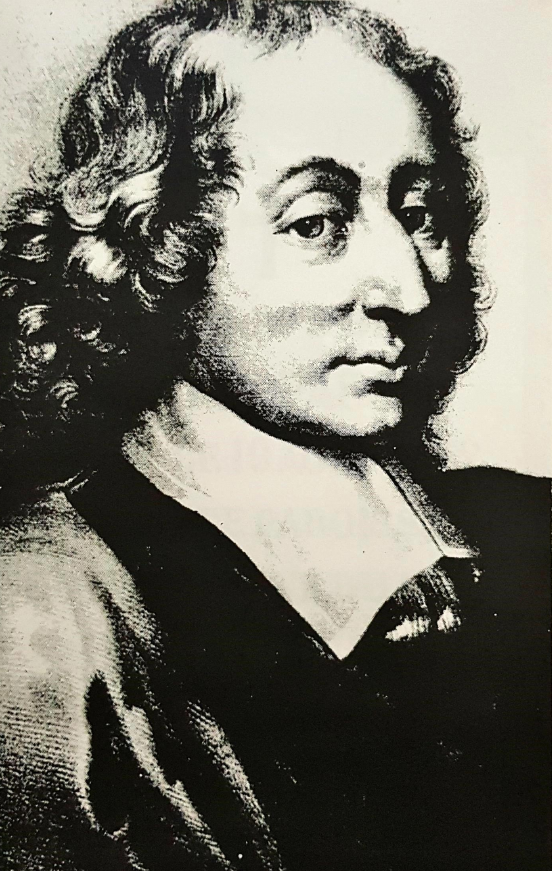
Dimensional analysis is very important for high school subjects, more specifically, physics (phýsis). In this post, we will show that 80% of the physics entrance exam questions are solved by dimensional analysis. The author who initiated dimensional analysis was Galileo Galilei. Below we present the work of Galileo. Galileo’s work Galileo Galilei Linceo Dimensional Analysis (Descartes, Leibniz, Newton and Galileo) Today, we study in physics the units of the International System (SI), which emerged as a global standardization. All of this is due to globalization, or specifically, world trade.
August 14, 2022 Read
Hero Image
Fees

In cases where a ratio is compared in different units, such as speed, telephone tariff, among others. This ratio (division or quotient), which is a rational number, is called rate. Common rate examples: Example of Rate with Speed a dog travels 2 meters in 2 seconds; rate is 1 meter per second $$\text{taxa} = \dfrac{2~m}{2 ~s} = 1 m/s$$ Example of Rate with Telephone Tariff a telephone company charges R$ 1,00 per minute; rate is R$ 1,00 per minute $$\text{taxa} = \dfrac{R\\$~ 1,00}{1 ~\text{min} } = R\\$ ~1,00/ \text{min}$$

August 13, 2022 Read
Hero Image
Rule of 3

The rule of three is widely used by chemists for stoichiometric calculations. This rule is taught in elementary school and was used by Galileo in his work Variar Opera Mathematica of 1679. Help us build the math website. Donate as much as you can. Donation via Mercado Pago. Donation via PagSeguro. Below are some historical fragments about the rule of three:

August 12, 2022 Read
Hero Image
Proportions

The first concepts of proportion were seen in the works of Nicomachus of Gerasa, composed of two books, with Pythagorean doctrine. The concept of proportion is linked to the art of comparing and historically we have seen these concepts in: Ancient Egypt, Greece (Pythagorean School) in Crontona between the 6th and 5th centuries BC. Euclid’s Elements at approximately 300 B.C. Ancient Egypt Pythagorean School Euclidean School In Euclid’s Elements, he defines ratio as a kind of relationship with respect to size between two quantities of the same kind. This concept seemed a bit confusing to later generations of civilizations.

August 7, 2022 Read
Hero Image
Percentage Basics

The garden of a hundred flowers Color 25%, 50% and 75%. How many flowers are colored in each case? Explore the controls and explain what changed in your own words. Ative o JavaScript para ver esta figura interativa. Percentage can be defined as a quantity in relation to another evaluated over a hundred. This quantity is a value between zero and 100. It is present in the news, financial markets and everyday life in general.

August 3, 2022 Read
Hero Image
Operations with Rational Numbers

Positive rational numbers were widely used in Egypt in the centuries before Christ. After years as nomads, homo sapiens began the agricultural revolution and with it, the need to use rational numbers. Their use in land markings was the main need for the use of these numbers. On the Nile River, land flooding forced land to be re-marked. In this way, rational numbers were used to remark the lands. Definition Until now, in the history of mathematics, we have noticed that rational numbers are represented by a fraction in which:

July 22, 2022 Read
Hero Image
Introduction to Rational Numbers

The notion of dividing is present in our daily lives, for example, dividing a pizza is a simple process that reminds us of the notion of fraction. The first word we see in fraction is half or half. $$\dfrac{1}{2}$$ History of the representation of rational numbers The great mathematicians took a long time to understand the representation of rational numbers, including the notation for fractions. Next, we show the types of writing for fractions.

July 19, 2022 Read
Hero Image
Introduction to Integers

A journey that crosses zero Start at −3 and apply +5. Then try returning 4 units. Where does each route end? Em telas pequenas, deslize o gráfico na horizontal para ler os detalhes. Explore the controls and explain what changed in your own words. Ative o JavaScript para ver esta figura interativa. In the study of naturals, we use numbers to count, including zero. Now let’s expand this set with negative numbers and know the integers. Naturals are represented as:

July 18, 2022 Read
  • ««
  • «
  • 6
  • 7
  • 8
  • 9
  • 10
  • »
  • »»
Navigation
  • Start here
  • Recent posts
  • About Euler
  • App
  • Privacy
Contact me:
  • hirowat2@gmail.com

Euler's Eyes
© 2021 Euler Eyes.
Powered by Hugo Logo